LiveMasters of Search Conference 202622 Oct 2026 in BerlinGet tickets

AI Search Optimization

If someone asks ChatGPT, Perplexity, or Google's AI Overviews who solves their problem and you're not the answer, you've lost the deal before your site ever comes up. That's why we treat AI Search, also called AEO or GEO, as the next layer of SEO: track what your buyers actually ask, see what gets cited in response, and build the presence that earns it, tied back to the leads it produces.

Gaining results for

What AI Search optimization looks like for our clients

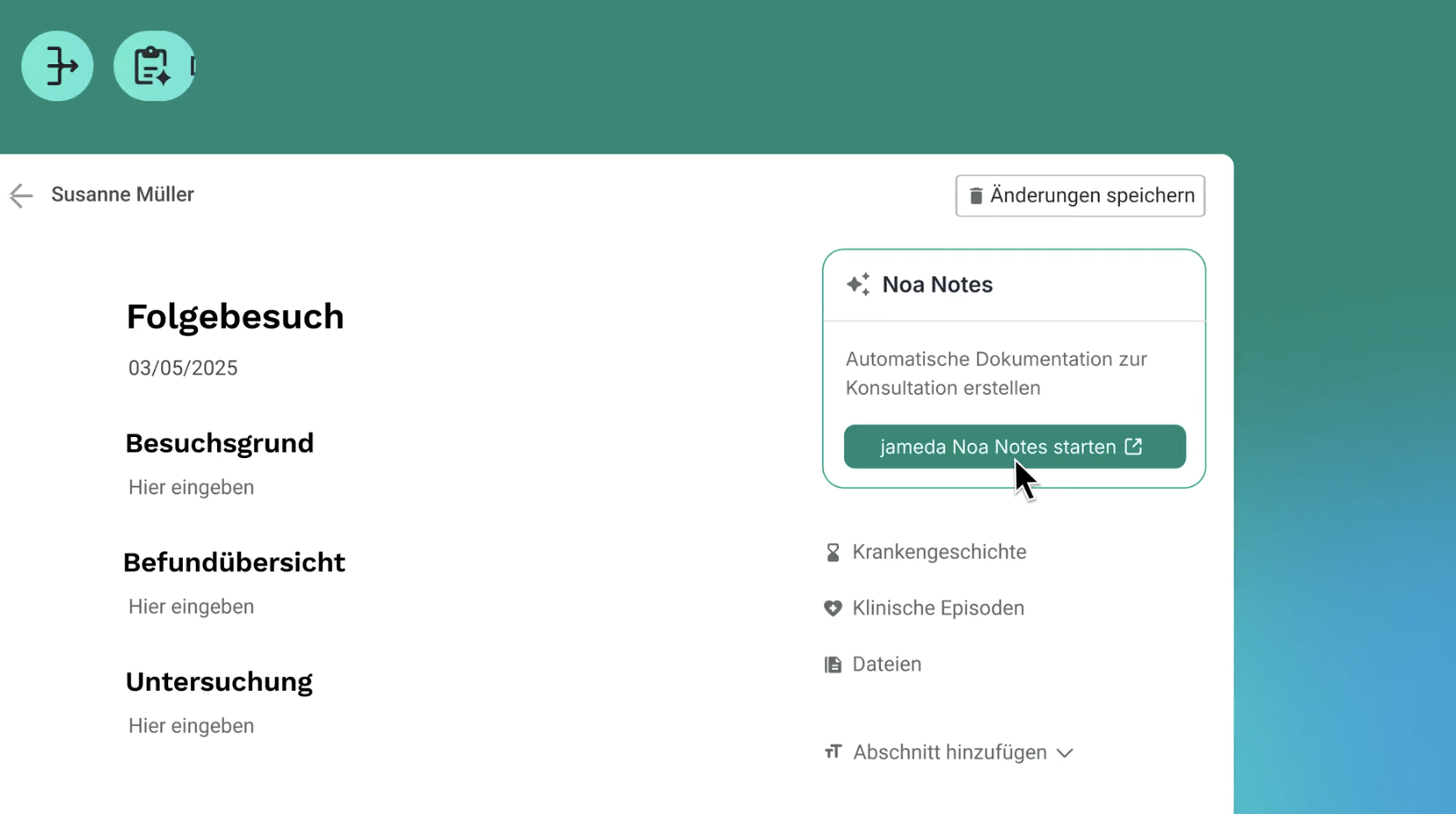
Noa Notes, jameda's AI documentation assistant, inside a doctor's patient record
Noa NotesB2B SaaS · digital health platform

Noa Notes, jameda's AI assistant for clinical documentation, is part of Docplanner's platform for doctors and patients.

First 6 months
  • 11% → 38.5%AI Search visibility (non-branded prompts)
  • 8% → 57%Retrieved as an AI source
  • #5 → #3AI Search competitor set

Why AI Search optimization matters for B2B marketing leaders

Whether you sell B2B or B2C, your buyers aren't waiting for permission to check with AI before they check with you.

Buying committees ask AI first

B2B buyers, and increasingly whole buying committees, research high-stakes purchases in ChatGPT or Gemini before anyone talks to sales.

It's already inside Google

Google's own AI Overviews and AI Mode sit inside the results everyone uses every day. The default now, not an option.

Enterprise carries B2C exposure too

A consumer-facing bank or insurer meets the same AI-driven research habits as any B2C brand, just at far bigger scale.

The drop-off reaches the board

Falling behind doesn't look dramatic. It looks like slowly losing the recommendation moment, until the gap reaches the board.

For a VP Marketing or CMO: visibility in AI engines isn't a line item you can defer. It's the same discovery layer you already invest in, just read by more people, and reported the same way.

How we get clients into the sources AI trusts

We map the questions your buyers actually ask

Search volume barely factors in here. We build a validated prompt set from your customers' own language, pulled from sales calls, support tickets and real interviews, then expand it into the fan-out queries it triggers, the extra questions an engine generates on its own. The priority: high-intent questions, where your brand or a competitor could plausibly get named.

A Peec AI prompt-tracking table for Heyflow, showing visibility, sentiment, position and mentions per prompt.

We build content that gets lifted into answers

Your own website is the surface you fully control. We structure it around answer capsules, sections that answer one question directly, since that's the unit AI engines lift into a response, written in definitive language rather than hedged copy.

A Peec AI source-retrieval report showing which Heyflow blog pages get pulled most often as sources.

We break visibility down model by model

A brand can be cited constantly in Perplexity and invisible in Copilot, or dominant on branded prompts and absent on the ones that bring in leads. We track performance by AI model and by source, so we know exactly where the gap is.

The AI models tracked in Peec AI: Google AI Overview, AI Mode, ChatGPT, Gemini, Copilot and Claude.

We win the off-site sources AI engines trust

Review platforms, LinkedIn and Reddit threads already cited, relevant roundups, an underused YouTube library, affiliate content already part of your category. Which one matters is a finding from your prompt data, never a default.

A Peec AI report of YouTube videos that mention and get retrieved for Heyflow, with URL type and retrieval counts.

How we measure whether it's working

We track your AI visibility score just as closely as the leads it produces, since looking at only one tells half the story.

Visibility

AI Search visibility, share of voice, brand mentions, citation rate, sentiment (how positively AI models describe you, and what they're actually saying), and position whenever you're mentioned.

Leads

We treat AI Search like paid or organic: a "how did you hear about us" field in your own website forms, feeding into the CRM, ideally captured on every deal you win even where it isn't mandatory everywhere, plus AI-referral sessions in GA4 from chatgpt.com and perplexity.ai, and branded-search lift in Search Console once visibility moves.

Together, those signals show how much pipeline AI Search actually produces, and in the best case, which engine sent the lead, something last-click attribution misses entirely.

More on AI Search, from people who study it closely

Niklas Buschner, Radyant's CEO and founder, hosts Masters of Search, our own podcast, now 45 episodes deep. He's talked AI Search, SEO and organic growth with some of the sharpest operators and researchers in the space, and what they say doesn't stay in the recording, it feeds directly into how our team runs accounts. A few conversations worth your time:

See where you stand in AI Search today

  1. 1Free instant auditRun a 60-second check on your SEO & AI Search visibility.
  2. 230-minute intro callWe map your goals and give a first read on opportunities.
  3. 3Deep-dive + growth plan90-minute custom-tailored deep dive on your growth levers.
Book free meeting
  • Jessica Ehrhardt
    Jessica Ehrhardt
    Chief Growth Officer
    Obsessionrocycle
    In Search since2021
  • Nina Grimmeiß
    Nina Grimmeiß
    Growth Account Executive
    Obsessionnyc
    In Search since2023

Questions we get about AI Search

Is AI Search different from SEO, or just SEO with a new name?

Both, honestly. We think of them as two gears turning together, not two separate services. SEO fundamentals, being the best answer on the open web, are the base gear. Turn it, and it drives a second one: whether ChatGPT, Microsoft Copilot, Gemini, and Google's AI Overviews cite you for the question you'd want to own. On top of that sit a handful of initiatives built specifically to turn that AI-visibility gear faster: a real, validated prompt set, tracked to see which sources actually get cited, then work placed exactly where those citations land, whether that's your own site, a YouTube video, or a review platform. AI Search is grounded in fundamentals we've run since 2013, technical health, genuinely being the best answer on a topic. But it also opens surfaces SEO never had to touch on its own, and comes with an attribution problem SEO never had either, since last-click reporting simply doesn't see an AI recommendation. Anyone who tells you it's identical to SEO, or a completely separate discipline, is oversimplifying to sell you something.

Do you work with large organizations and enterprise accounts?

Yes, and it's a focus we're actively growing. Large organizations research differently: several people across a buying committee independently ask the same category question, not just one champion, so visibility has to hold up across all of them, not a single journey. We work alongside whatever internal team or agency of record you already have, inside your existing tools and approval process, rather than asking you to route everything through us. The one thing that doesn't change with company size: we still commit to a concrete goal and report against it the same way.

Who actually runs my account, a senior team or a junior account manager?

A senior team, the whole way through. There's no senior-in-the-pitch, junior-in-delivery handoff here: a senior strategist owns your account from day one, works inside your own Slack or Teams, and stays hands-on for as long as we work together. The same senior person builds your prompt set and reads the results, not a junior translating it back to you afterward.

Is AI Search its own service, and what does it cost?

It's part of the same Growth Partnership retainer, starting at €7k a month. We don't think SEO and AI Search should be split into separate line items, since the work genuinely overlaps. For something narrower, a YouTube optimization push, say, we also run fixed-scope projects instead, priced separately and over a shorter, one-off timeline rather than an ongoing retainer.

What's the difference between AEO and GEO?

Not much in practice. Answer Engine Optimization and Generative Engine Optimization are two names for the same shift: getting cited inside an AI-generated answer instead of ranking a blue link. Both also point at the same underlying mechanic, an engine expanding your buyer's question into several fan-out queries and pulling sources for each one. We use "AI Search" as our umbrella term because it's what buyers actually type into Google, but we track the same thing whichever label you prefer.

Which AI engines do you track and optimize for?

ChatGPT, Perplexity, Gemini, Claude, Microsoft Copilot, and Google's AI Overviews and AI Mode, tracked through an AI visibility tool, but the mix always follows where your buyers actually search. A company whose customers live in the Microsoft ecosystem is far more likely to ask Copilot than Perplexity, so Copilot gets weighted accordingly. A consumer brand with a younger audience often sees more volume in Google's AI Overviews and ChatGPT than anywhere else. We read that from your own prompt data rather than assuming one engine matters more than another.

How fast do you see results?

Faster than classic SEO in some cases, and that's the real difference. A content plan can take months to show up in Google rankings, and that's fine, it's exactly why we still run SEO: once a page ranks, it tends to keep earning for years. AI Search doesn't always follow that same timeline: when our client Heyflow's existing YouTube videos got new titles, descriptions and chapters, citations started climbing within days on content that had been sitting untouched for years. Other moves take longer to compound, our client deeploi's AI Search visibility went from 0% to about 20% over four months, and Heyflow's overall visibility climbed from single digits to over 50% across six months. It depends on how much trusted content and off-site presence already exists, and the biggest early wins usually come from work you've already done that nobody optimized for AI Search yet.

Do you guarantee a specific visibility score or ranking?

No, and anyone who promises a 100% guarantee on a ranking or visibility score is selling you something, not measuring it. What we do instead: before any engagement starts, we run a completely free strategy session using your own live data, current visibility, competitors, and where you actually stand today. Based on that status quo, our experience with similar accounts, and the specific initiatives we plan to run, we define a concrete goal for what we'll reach by a set point in the partnership, and we commit to it. We can't guarantee the outcome, nobody honestly can, but we throw everything we have at hitting it, and we stay transparent about where we stand against it the whole way through.

Does AI Search replace SEO, or run alongside it?

Alongside it, on the same team, from the same content. The work that earns rankings in Google is largely the work that earns citations in ChatGPT and Perplexity: a technically sound site, genuinely useful content, and a clear answer to the question someone's actually asking. Where the two diverge is the off-site layer, the review platforms, YouTube, and community threads AI engines lean on more heavily than classic search results ever did.

Do you also work with review platforms, LinkedIn, Reddit and YouTube directly?

Yes, wherever the data says that's where the citations actually are. We don't run all four for every account by default. We read your prompt data first, see which sources these engines are actually pulling from in your category, and act on whichever combination, a review platform like OMR Reviews, an existing YouTube library, LinkedIn, Reddit, or outreach into the roundups your buyers already read, genuinely shows up in the answers.