We set clear goals from day one: more leads, better attribution, and a presence in AI search. Nine months in, organic leads have more than tripled and AI search has become a real acquisition channel for us. The team at Radyant knows what they're doing.

How we grew organic leads by 250% for deeploi, an IT management platform for growing companies
When Radyant started working with deeploi in November 2025, their organic presence was still in its early stages: solid fundamentals, but AI visibility at zero and organic lead volume still modest. Eight months later, AI search is a measurable lead channel. Organic leads have grown by more than 3x. A content program built around how buyers actually search, combined with a systematic review platform presence. Several levers working together, not one tactic in isolation.
- +250%organic web search leads
- 0% → ~20%AI visibility
- 24%share of voice in AI search
- #2in the AI search competitor set
Executive summary
- Organic web search leads grew 3× in eight months
- Zero AI visibility at kickoff; #2 in the competitor set by March
- 65+ content pieces built for every stage of the buyer journey
- OMR Reviews presence expanded across every relevant category, not just one profile
- AI Search became a new, measurable lead channel
organic web search leads, relative to nov 2025
Nov2025
Dec2025
Jan2026
Feb2026
Mar2026
Apr2026
May2026
Jun2026
Source: Radyant / deeploi internal reporting
deeploi is the IT management platform for growing companies with limited internal IT resources
deeploi is an IT management platform built for growing companies. It helps HR teams, founders, and IT managers handle onboarding, offboarding, device management, software management, and account management in one place, designed for companies where internal IT resources are limited. More than 200 companies trust deeploi, from fast-growing startups like Instaffo and HOLY Energy to established mid-sized businesses across the DACH region.
Radyant started working with deeploi in November 2025 to build a presence in the layer where IT buyers now do most of their research: AI Search, alongside Google.
See the whole process and the results
65+ content pieces, built for every stage of the buyer journey
Buyers research IT management software the same way they research anything else: how-to guides while they're still defining the problem, comparisons once they're evaluating options, alternatives articles right before a decision. The content program covered all three stages, built around real buyer intent rather than keyword volume. Examples from the live roadmap: "IT-Kosten senken: 11 innovative Lösungen", "Die 5 besten Atera Alternativen 2026 im Vergleich".
Programmatic scale from March 2026: more output, same quality bar
From March 2026, we added a programmatic content cluster: entire pages built in days instead of weeks, seeded from real product knowledge, without dropping depth. More queries covered means more surfaces owned in AI Search. Example from the cluster: an onboarding checklist built at this pace.
OMR Reviews: listed in every relevant category, not just the profile
deeploi already had an OMR Reviews profile. Our contribution: identifying which categories it was missing (IT Service Management, IT Asset Management, Offboarding, Service Desk). That put the profile into the category listicles and comparison pages LLMs actually cite, not just the standalone vendor page. deeploi took it from there with active review acquisition. Result by Q3/26: 3× Leader badges, 1× Top Rated.
In direct comparison prompts: 32 deeploi citations vs. 4 for Atera
We tracked comparison prompts, ones that name two tools and ask the model to pick, pitting deeploi against Atera, a close competitor far less present on OMR Reviews at the time. deeploi's review and alternatives pages were retrieved 32 times combined, Atera's 4. Review-platform presence and category coverage, not just the standalone profile, are what AI engines reach for in a head-to-head comparison.
This finding matches our Software Prompt Study: comparison, alternatives, and category pages, on and off review platforms, are what LLMs reach for most when answering commercial software queries.
From 0% to #2 in the AI Search competitor set
At kickoff, deeploi had zero AI visibility across all tracked models. By March 2026, four months in, visibility had climbed to 20.3% with real buyer queries. deeploi has held #2 in the competitor set since. Today, visibility sits at ~20%, with a peak of 24.3%.
The result that matters: 3x organic leads in 8 months
Organic leads are the metric that matters, not rankings, traffic, or AI visibility scores. From day one, Radyant and deeploi set shared lead targets and calibrated every initiative against them. Since November 2025, organic web search leads have grown by more than 250%, visible from February 2026 and peaking in March. Content volume, conversion optimization, and programmatic scale all contributed. No single factor can be isolated. Monthly counts are small and move around (a single month is noise, not signal); the sustained step up from the Nov-Jan baseline is what held.
ai search leads via self-reported attribution, cumulative, relative to dec 2025
Dec2025
Jan2026
Feb2026
Mar2026
Apr2026
May2026
Jun2026
Jul2026
Source: Radyant / deeploi internal reporting
AI Search: a lead channel that didn't exist before
Before the partnership, deeploi had no AI visibility, so this channel barely existed. That changed: LLMs now show up as named lead sources in the CRM through self-reported attribution, cumulative and rising since the first one landed in December 2025.
Self-reported attribution understates it. Leads that started with a Google AI Overview usually get logged as regular organic search, not as AI, so the real AI-driven number is higher than what's tracked here. What's no longer in question: AI Search is a real demand channel for deeploi.
The Radyant crew
The key people behind this case study

Justin Bachmann
Senior Growth Strategist
Obsessionconcerts
In Search since2020

Yannick Reihs
AI Search Strategy Lead
Obsessionpeec ai
In Search since2024

Annalisa Ivaldi
Growth Strategist
Obsessionwriting
In Search since2021

Larissa Jaite
Design Specialist
Obsessionillustration
In Search since2022
What others say about working with Radyant
They can say it better than we ever could
“I have worked with a lot of agencies over the years. Radyant works like a really great business partner. Relentlessly curious, doing their own research, experimenting, constantly rebuilding their own processes, and that goes straight into the client work. No outdated playbooks, just straight expertise, full dedication to providing the best for their clients - and just great people to work with! If you want to know what works in search right now, Niklas and his team are who I would ask!”

Head of Web, Pipedrive

“We took Heyflow from #9 to #1 in AI Search visibility in 6 months and 3x'ed MRR pipeline. The only channel that converts better? Referrals, people who actually recommend Heyflow to others. Huge shoutout to Niklas Buschner and the team at Radyant who helped us build the foundation for this.”

CEO & Co-Founder, Heyflow
“We set clear goals from day one: more leads, better attribution, and a presence in AI search. Nine months in, organic leads have more than tripled and AI search has become a real acquisition channel for us. The team at Radyant knows what they're doing.”
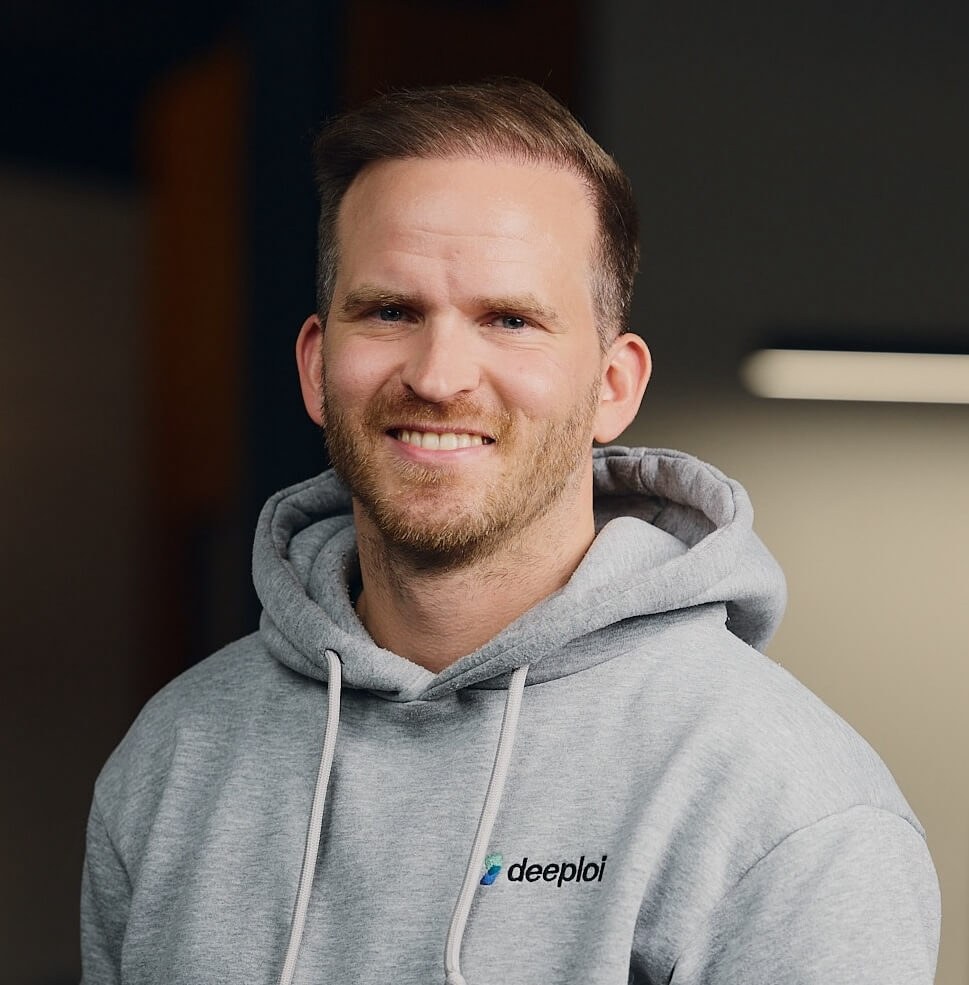
Co-Founder & CEO, deeploi

“Growth doesn't come from playing it safe. It comes from running smart experiments. With Radyant, in less than a week we shipped 247 AI-powered pages. Ambitious, data-driven, ready to push boundaries.”

Co-Founder, Planeco Building
“We tested very innovative SEO approaches with Radyant that are already bearing fruit and have helped us take the next big leap. The team always goes the extra mile, not only on SEO, but wherever there's an urgent need.”

CEO & Co-Founder, Planeco Building
“We've been working very successfully with Niklas and the team since 2022. Absolute marketing experts. I can recommend them 100%. We got really lucky to hire them.”

Co-Founder, Enter

“The team is fully committed, highly motivated, and does great work. They independently bring very good ideas and take care of high-quality implementation. I can fully recommend working with them.”

CEO & Co-Founder, ToolSense