 Add as preferred source on Google
We wanted to know how important AI already is in SEO job listings. So we've read 2,360 of them on LinkedIn and Indeed across Germany, the UK and the US, most recently in September 2026. And what we found was quite surprising.
We did this analysis for the first time in May 2026 and updated it in September 2026. We will keep updating this page with the latest data to spot changes and patterns, and to have it act as a reference you can bookmark or share with your colleagues.
Key takeaways
- 62% of SEO and content listings mention AI, and 33% already say it's required.
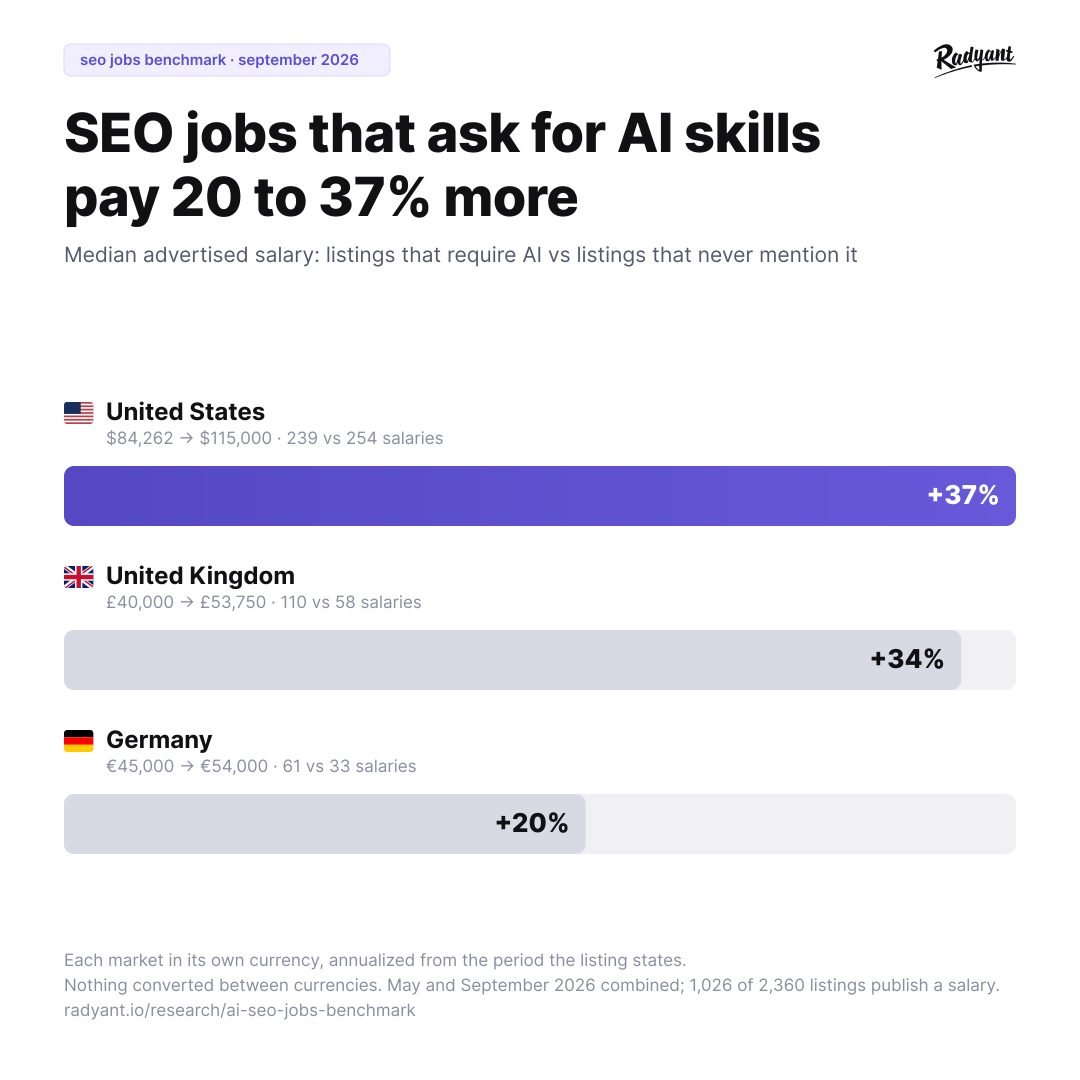
- SEO jobs that ask for AI skills pay 20 to 37% more. US +37%, UK +34%, Germany +20%.
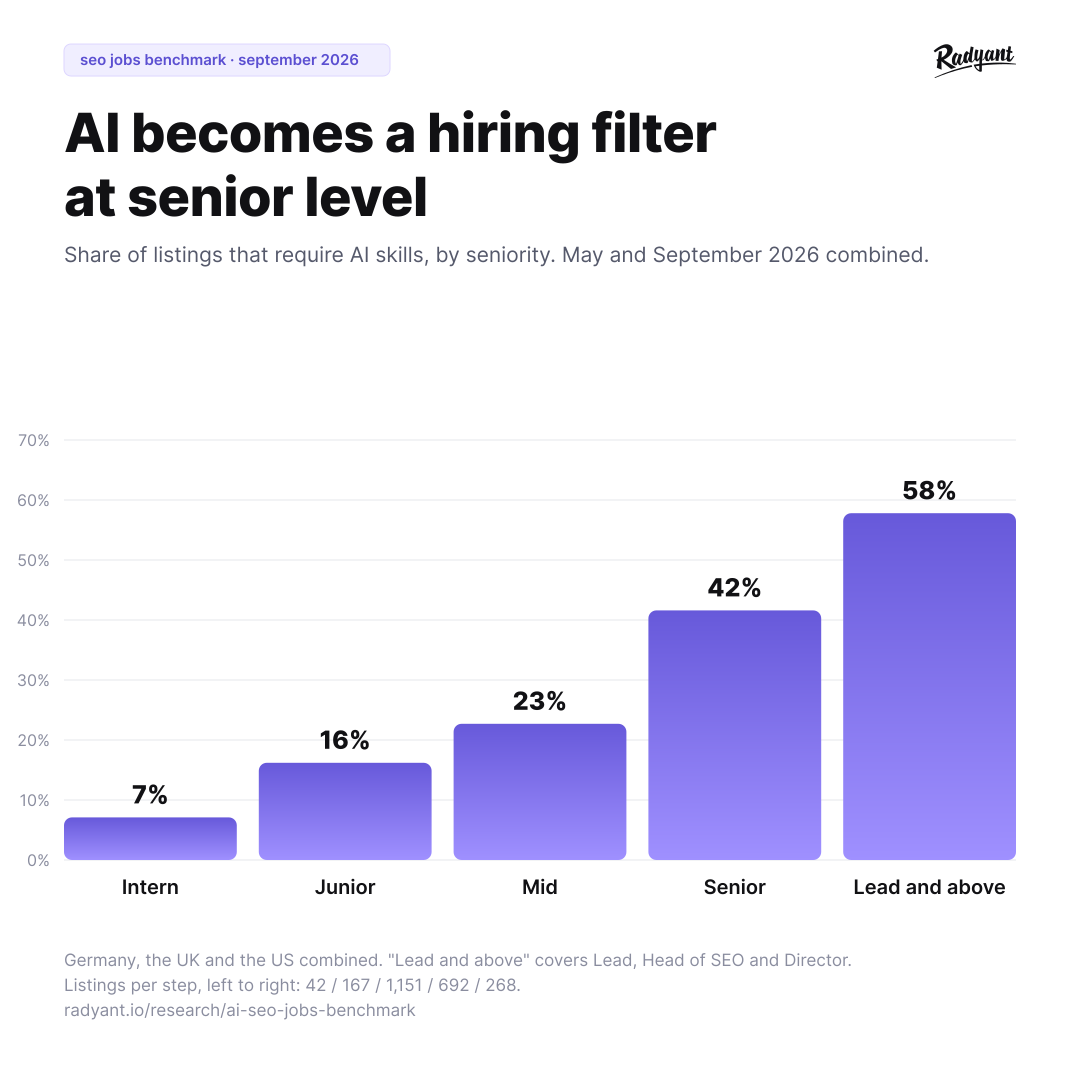
- AI becomes a requirement at senior level. 16% of junior roles ask for it, 42% of senior roles, 58% at lead and above.
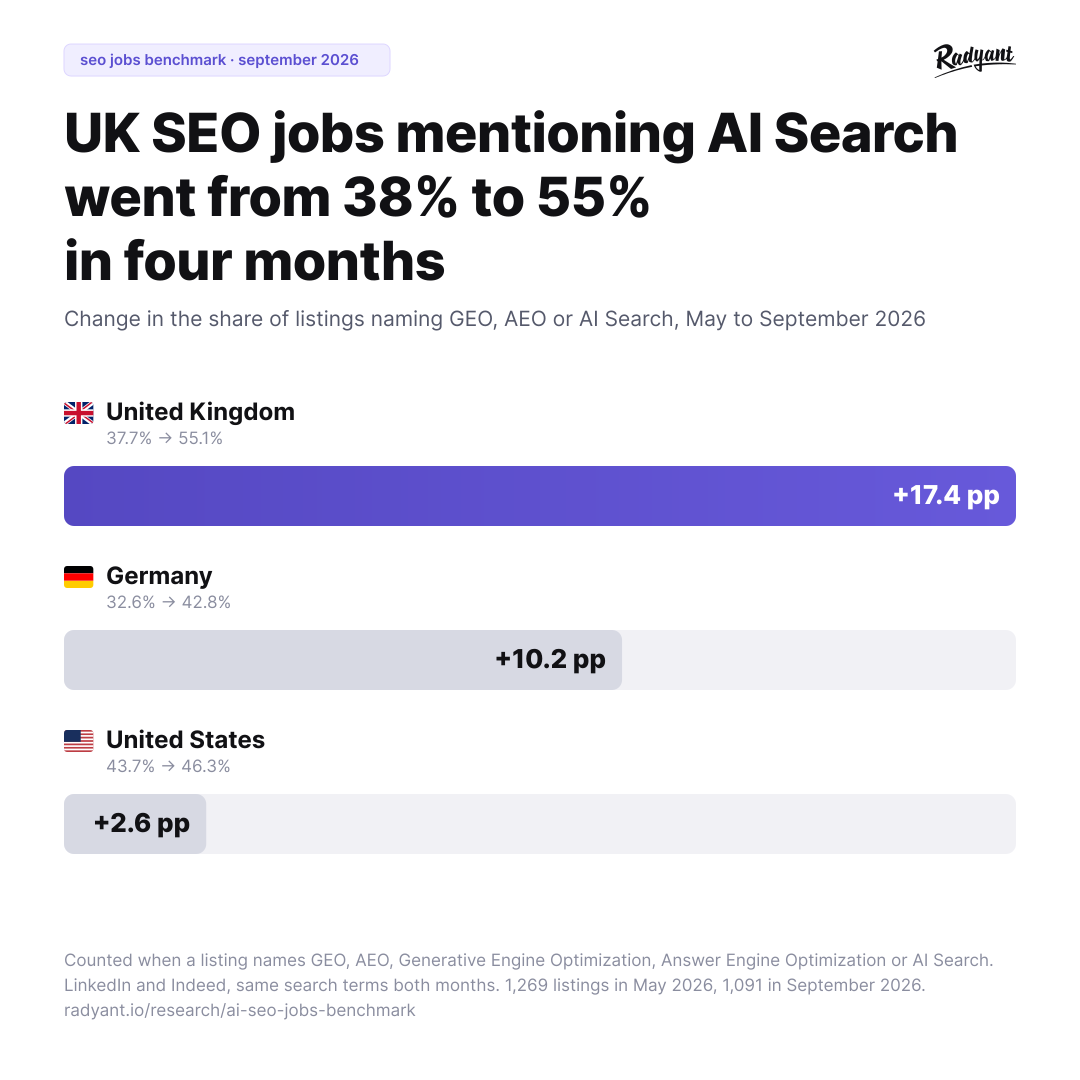
- UK listings naming AI Search went from 38% to 55% in four months. Germany went from 33% to 43%.
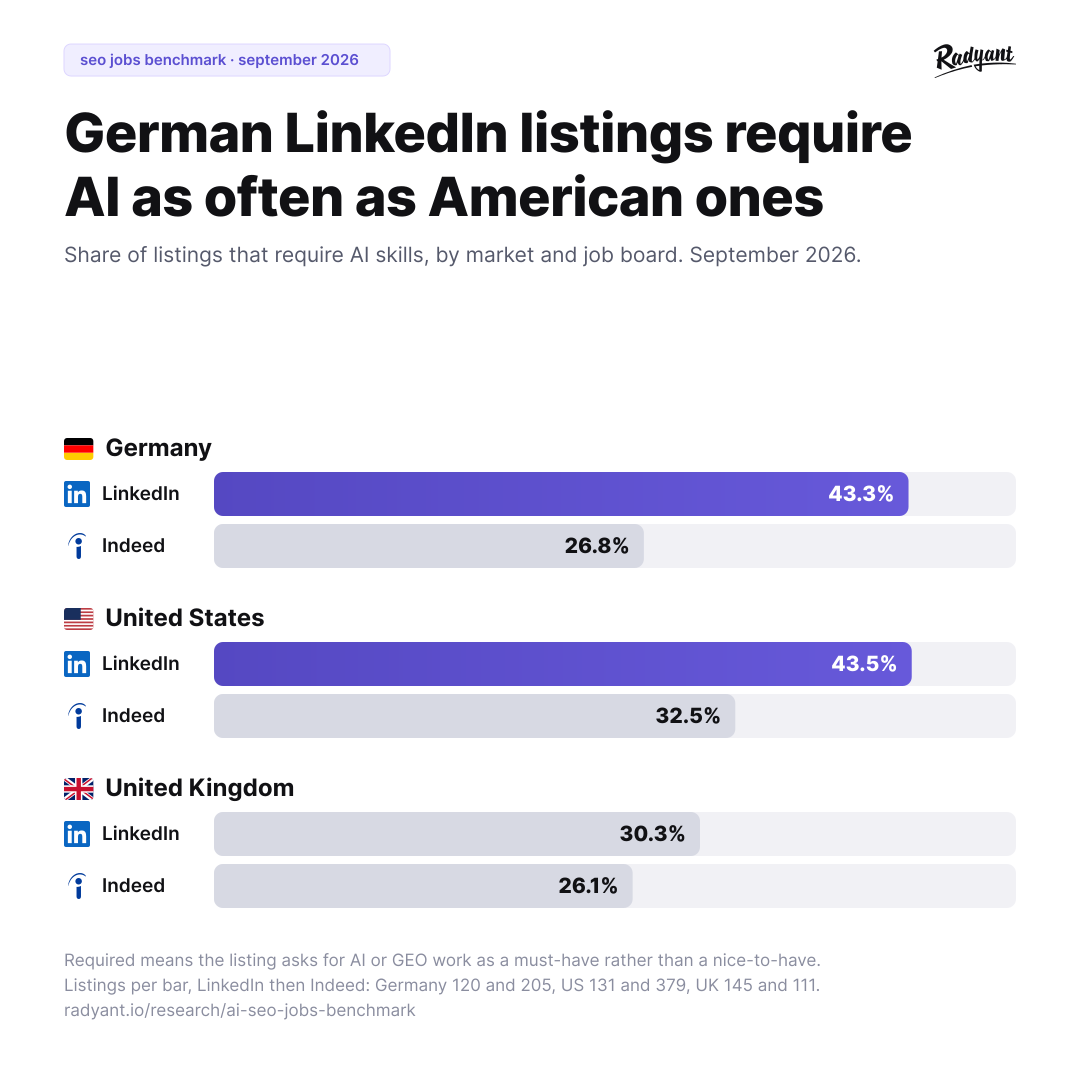
- German LinkedIn listings now ask for AI as often as US ones, 43.3% against 43.5%. On Indeed, German listings sit at 26.8%.
- Median advertised salary: €48,250 in Germany, £41,500 in the UK, $100,000 in the US.
How we run the analysis
- Where they come from. LinkedIn and Indeed, the same nine or ten job titles in Germany, the UK and the US. Anything that isn't an SEO, content or AI Search role gets dropped.
- How they get read. Claude fills in the same 30-question form for each one: what the job requires, what it only welcomes, the content-to-technical split, what it pays. We hand-check a sample every time.
- Only the last 30 days count. A four-month-old listing describes an older market. On Indeed, 56% of listings posted in the past week mention AI against 24% of those older than four months.
- GEO and AEO are counted in the employers' words, not ours. GEO, AEO, Generative Engine Optimization, Answer Engine Optimization, AI Search, AI Overviews, and German equivalents like KI-Suche. A listing that only mentions ChatGPT as a team tool doesn't count: it has to point at the discipline.
- Nothing changes between readings. Same titles, boards, window, form and model, which is what lets a September number be compared to a May one.
AI in general is in 62% of listings, and the UK moved fastest on AI Search
We wanted to know how much of the market has already written AI into the job, and how that changed over the last months. A good way to check it is looking at the share of listings that name the discipline itself: GEO, AEO or AI Search.
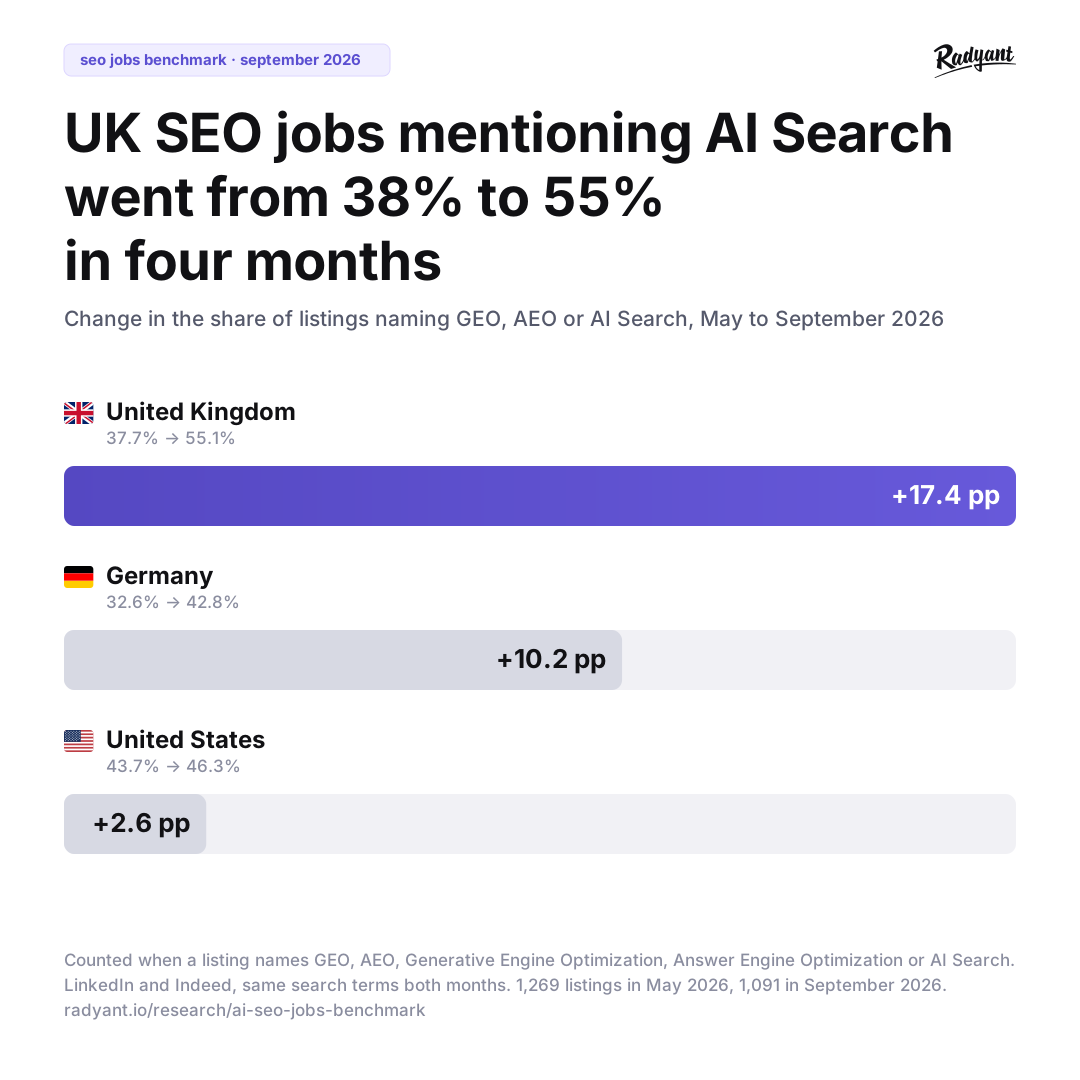
The UK moved 17 points in four months, Germany 10, the US under 3. Across all three markets, 62% of the September 2026 listings mention AI, 33% say it is required and 38% never mention it, on 325 German, 256 British and 510 US listings.
| Signal | Germany | United Kingdom | United States |
|---|---|---|---|
| Mentions AI | 45.4% → 55.7% | 51.3% → 68.3% | 62.6% → 62.4% |
| Says AI is required | 25.3% → 32.9% | 27.3% → 28.5% | 36.8% → 35.3% |
| Names GEO, AEO or AI Search | 32.6% → 42.8% | 37.7% → 55.1% | 43.7% → 46.3% |
| Expects the hire to own LLM visibility | 21.0% → 28.9% | 27.9% → 38.3% | 29.9% → 33.9% |
| Names AI Overviews | 7.5% → 10.2% | 9.1% → 10.5% | 9.6% → 13.9% |
Two data points (May 2026 and September 2026) are not a trend yet, but it's interesting to see the heavy uplift in the UK and Germany compared to the US, which obviously started from a higher baseline.
German LinkedIn listings now ask for AI as often as US ones
We wanted to understand how often AI is already required and how that might be different across regions and job platforms. So we compared Germany, the UK and the US and split the scraped listings between LinkedIn and Indeed.
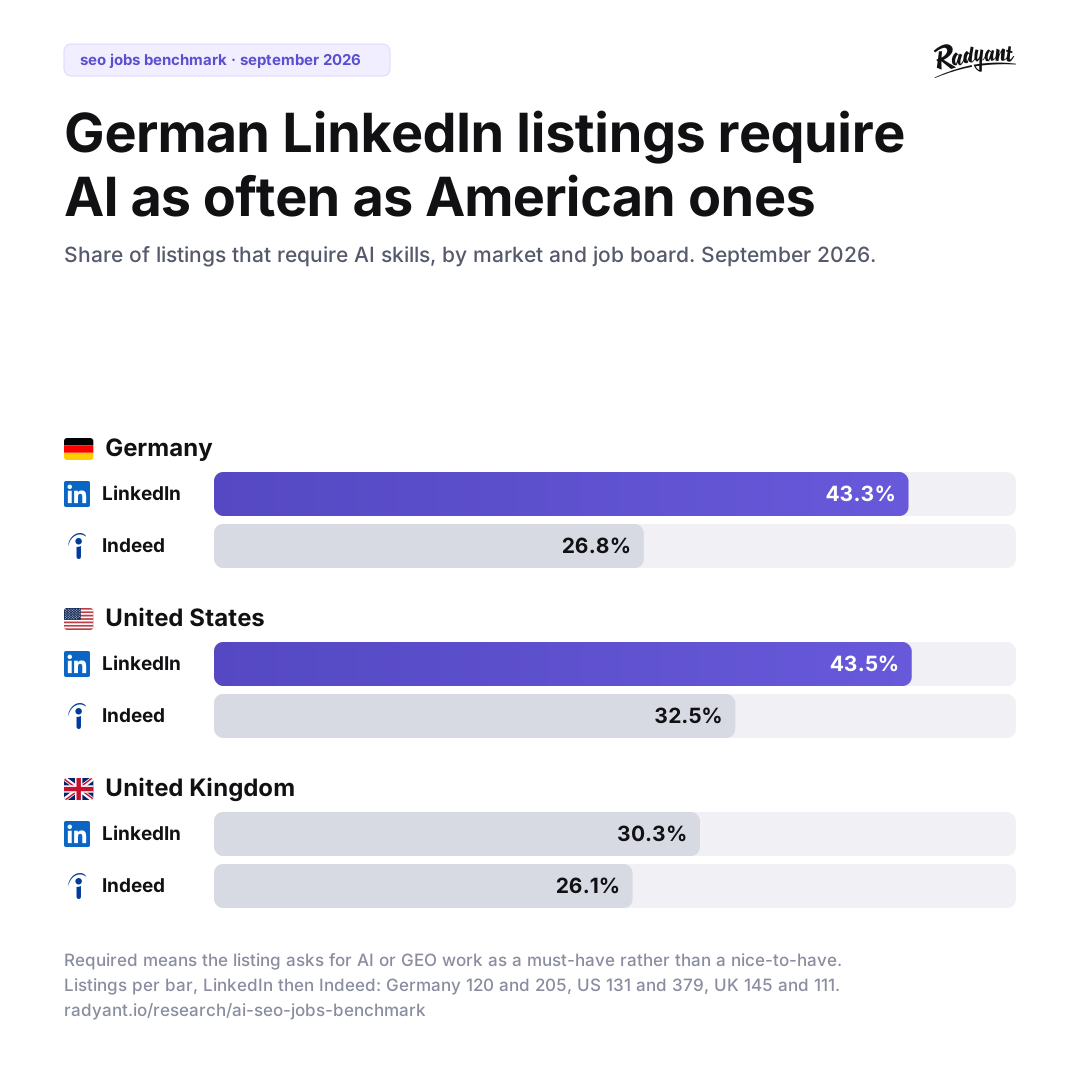
| Says AI is required, September 2026 | Indeed | |
|---|---|---|
| Germany | 43.3% (120 listings) | 26.8% (205 listings) |
| United Kingdom | 30.3% (145 listings) | 26.1% (111 listings) |
| United States | 43.5% (131 listings) | 32.5% (379 listings) |
In May 2026, German LinkedIn listings sat at 32.7% against the US with 40.1%. Four months later they are level.
AI becomes a requirement the more senior a role gets
Another thing we wanted to know is how the requirement for AI skills correlates with seniority and how big the potential differences are. We already expected it to be different between junior and senior roles, but we were quite surprised by the extent of it.
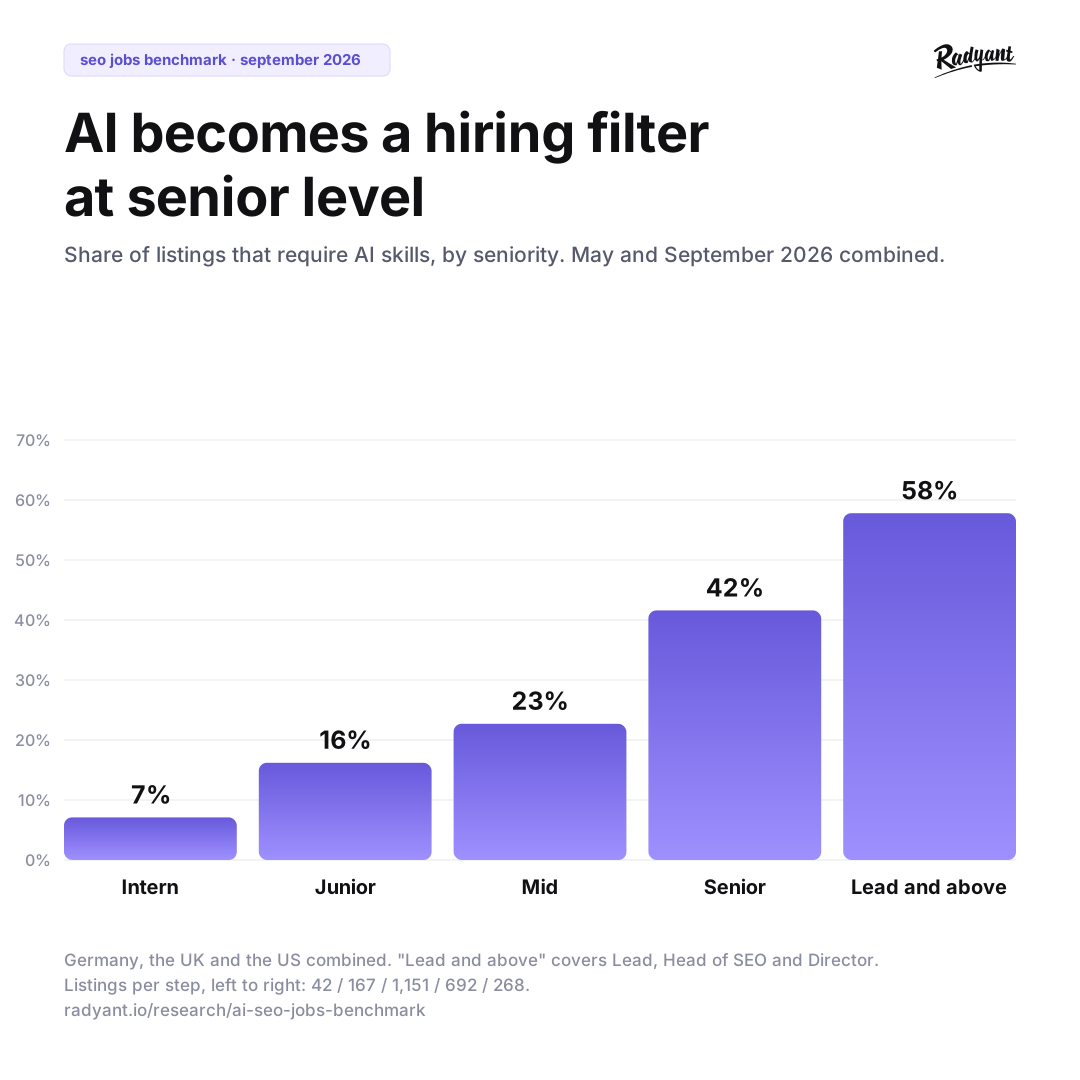
The biggest step is between mid and senior, from 23% to 42%. Above senior it flattens out on a pretty high level. Lead, Head of SEO and Director land at 58%, 55% and 60%, with samples of 109, 66 and 93 listings.
Median SEO salary: €48,250 in Germany, £41,500 in the UK, $100,000 in the US
We also wanted to know what these jobs pay, by level and by market. A lot of job listings do not show a salary but it's still an interesting data point if you can layer the expected skills with the advertised salary.
Each market is presented in its own currency, but we built a little currency converter so you can convert it into your local currency at the latest ECB reference rate.
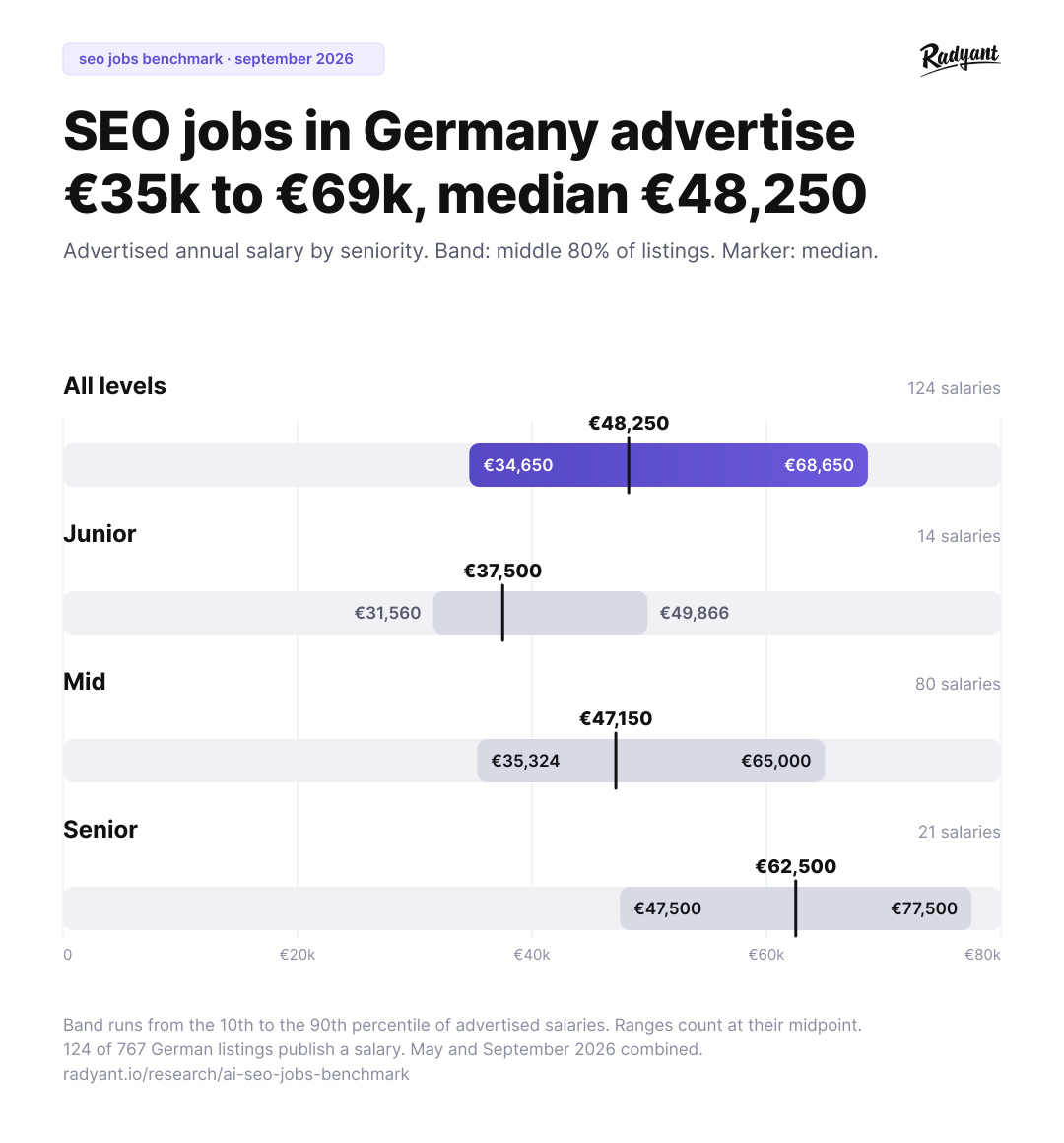
Advertised annual salary by seniority and market
Each band covers the middle 80% of listings that publish a salary, the marker is the median · May and September 2026 combined · 124 of 767 listings publish a salary
Across all levels the median is €48,250 in Germany, £41,500 in the UK and $100,000 in the US. A senior role has a median of €62,500, £50,000 and $118,750.
SEO jobs that ask for AI pay 20 to 37% more
A common question asked: if a job asks for AI do I also get more money? To answer that, we compared the median advertised salary of listings that require AI with listings that never mention it, market by market.
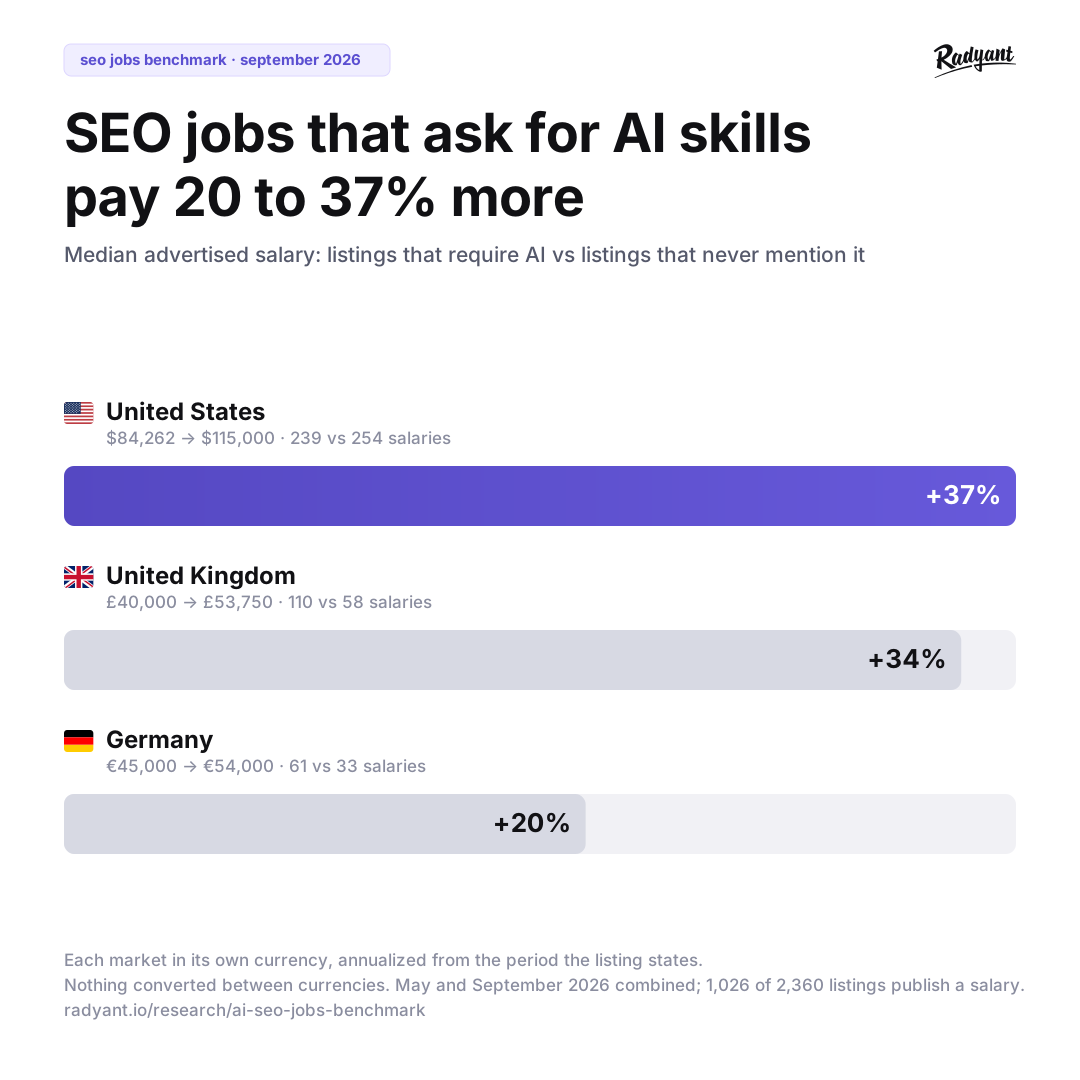
The exact gaps are 36.5% in the US, 34.4% in the UK and 20.0% in Germany. Each market is read in its own currency and annualized from the period the listing states.
Take the US absolutes with a pinch of salt. In January 2026 San Francisco began offering free childcare to a family of four earning under $230,000 a year, on the grounds that the city is too expensive to raise children on less. Two people earning the $115,000 median above would land right on that line. Absolute salaries should always be looked at with the costs of living in mind.
Jobs that require AI are also more senior on average, and seniority explains part of any pay gap. So this is partly also a gap between junior and senior, rather than simply a raise for learning AI.
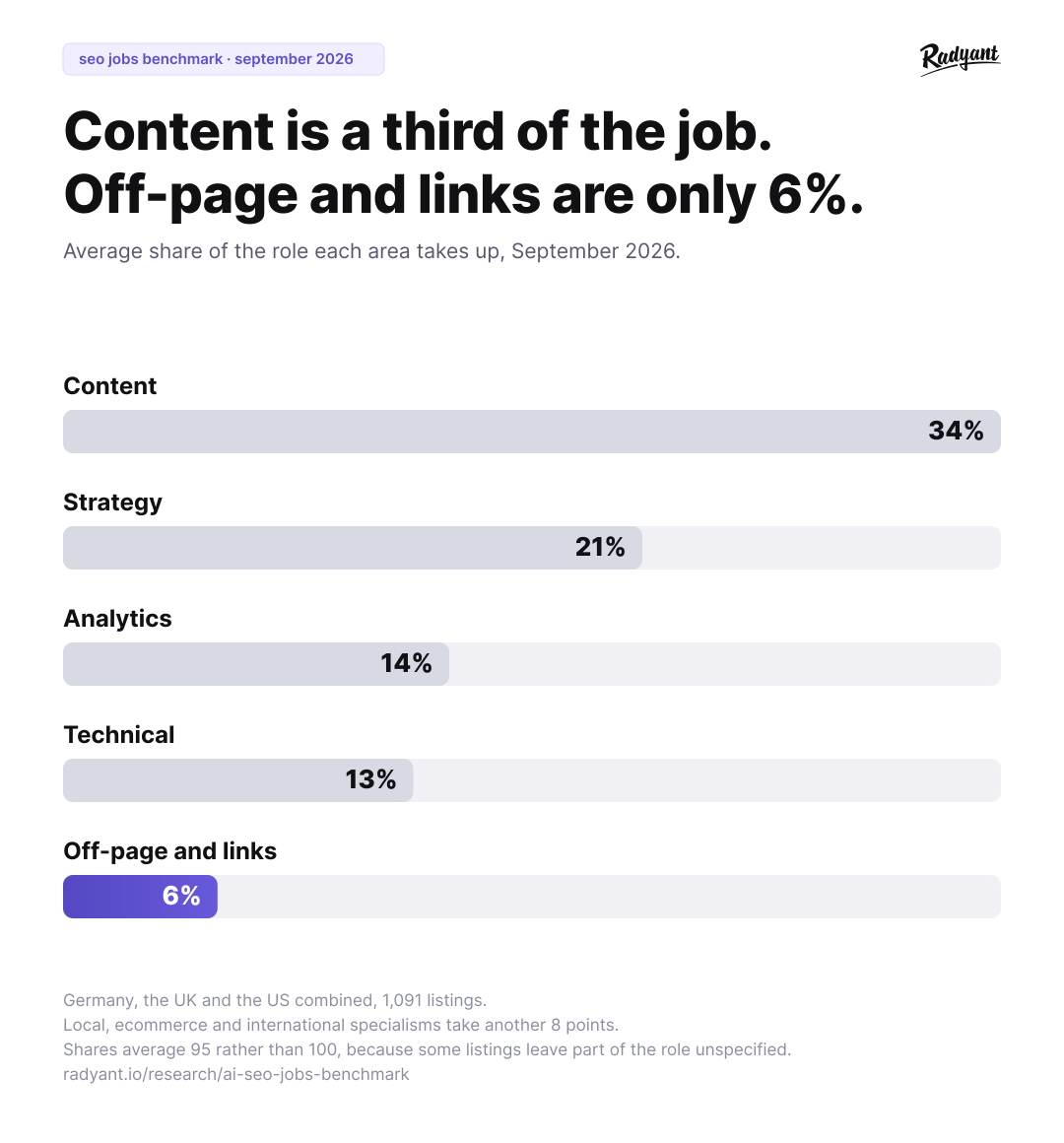
Content is still a third of the job, off-page and links are only 6%
The last thing we wanted to see is how the job itself is divided: how much of a role is content, how much is technical, how much is links. Every listing describes that, so we had each one split into shares.
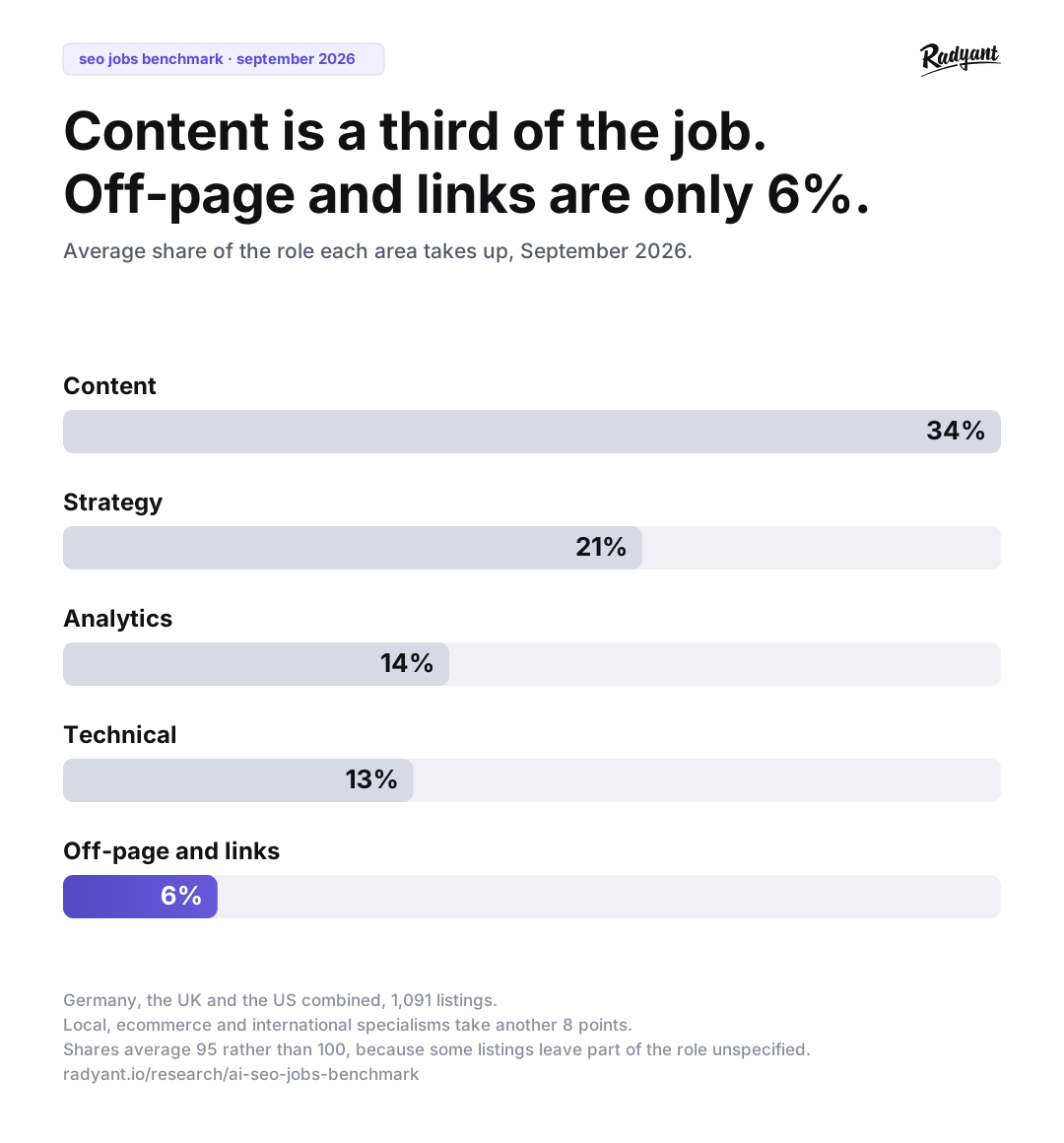
Content is a third of the job in all three markets and off-page work is 6%, as far as the listings describe the role.
| Market | Technical | Content | Off-page | Analytics | Strategy |
|---|---|---|---|---|---|
| Germany | 11.3% | 30.6% | 5.5% | 15.3% | 21.0% |
| United Kingdom | 14.2% | 33.2% | 6.3% | 13.8% | 20.3% |
| United States | 12.8% | 36.7% | 5.3% | 13.2% | 21.3% |
Content grew by more than four points in both the US and the UK since May 2026. Off-page work sits between 5% and 6% and hasn't moved either time we looked.
Much of the current discussion about getting cited in AI answers points off-site: what other people write about you, where you get mentioned, which third-party sources an engine already trusts in your category. We think that is broadly right, and a good deal of our own work sits there. Hiring has not caught up. Off-page is the smallest block of the job in all three markets, and the only one that hasn't moved in four months.
Explore the data
Which signals SEO job listings name, by market
Pick a market to see which signals its job listings name. The last two tabs cut the same data by seniority and by how old the listing is.
share of Germany listings naming the signal · 325 listings
tick marks May 2026
Run your own analysis
One row per job listing, with the 30 fields we classify: the AI and GEO signals, seniority, role archetype, the focus mix, tools named, and the parsed salary where a listing publishes one. All 2,360 listings this page reports on are in it, so every market figure above reproduces from the file.
The rows carry our classifications, not the listings themselves. Employer names, links, listing text and recruiter contacts stay out. employer_id is a scrambled code, so you can group rows by employer without knowing which employer. If you need a cut the file can't give you, ask us.
What this can't tell you
A job listing is not a job. It's what a company was willing to write down while hiring. Listings overstate wishlists, understate what the role does on a Tuesday, and some get reposted from the last hire.
LinkedIn and Indeed only. The two boards cover the broad market and miss the niche ones.
The window keeps the sample small and the numbers high. Each reading lands a few hundred listings per market: enough for a percentage give or take a couple of points, not enough to slice three ways at once. Without the window the 62% above would read 50.8%, so check what each side counted before deciding our number disagrees with one from somewhere else.
Salaries are thin. Fewer than half of listings publish one, fewest in Germany.
Big employers count more than once. A company hiring twelve people appears twelve times.
Treat gaps under about two points as noise. We hand-check a sample of the classifier's work each time and find high agreement, which is not a measured accuracy score.
FAQ
How often does this update?
We run the same search again and update this page, rather than publishing a new post each time. The byline shows when it was last updated, and every reading stays on the page so you can see the movement instead of just the latest number.
Can I cite these numbers?
Yes, and please link the page rather than quoting a figure on its own. The numbers change each time we read, so a link stays right while a loose percentage goes stale.
Why only Germany, the UK and the US?
Those three give us one German-speaking market and two English-speaking ones, which is what makes the gap measurable. They are also the three where LinkedIn and Indeed both carry enough SEO and content listings for a reading to mean anything.
Why measure GEO and AEO if you don't use those words?
We say AI Search. Employers write GEO and AEO, so that's what we count. Counting our own preferred words would measure our language instead of the market's.
Does a listing mentioning ChatGPT count as requiring AI?
Only if the listing asks for it. We count AI named as a requirement separately from AI named as nice to have, because the first one filters candidates and the second one doesn't.
Does this mean I earn more if I learn AI tools?
That's not what it measures. It's a gap between two kinds of listing, and the ones that require AI skew more senior. Seniority explains part of the difference.
Can we get the underlying data?
Most of it, yes. There is a download on this page with one row per listing and all 30 fields we classify, so you can cross-tabulate it yourself and check our numbers. What stays out is the listings themselves: employer names, links, the listing text, and the recruiter contact details some boards attach. Republishing those would mean putting other people's copy and several hundred identifiable people's contact data online, which we are not going to do. If you need a cut the file can't give you, ask.