 Add as preferred source on Google
ChatGPT already names a vendor in its first search query in 28.6% of tracked buying questions. Brands still get named without ever appearing in one.
A prospect asks ChatGPT for the best tool in your category. Before it fetches a single page, ChatGPT writes its own search queries, and one of them already names three of your competitors. Yours is not there. That screenshot has been going round for weeks as proof that AI Search is closed to challengers, and clients are now asking whether their content still buys them anything. So we pulled the fan-out queries behind 615 tracked buying questions and counted how often it actually happens.
Across 3,842 runs of those questions, the opening query already named a vendor in 28.6% (95% CI 25.6 to 31.6, clustered by question). When it did name one, it usually named several. The number that changed how we read this is a different one: between 9% and 29% of the times a brand was named in an answer, it had appeared in none of that run's search queries at all.
Key takeaways
- ChatGPT's opening search query already named a vendor in 28.6% of runs, across 615 tracked buying questions and 21 client accounts (95% CI 25.6 to 31.6). The behaviour is real, and it is the minority case.
- When that opening query does name a vendor, it usually names several. Two thirds of those runs carry two or more names, which is the shortlist pattern the circulating screenshots show.
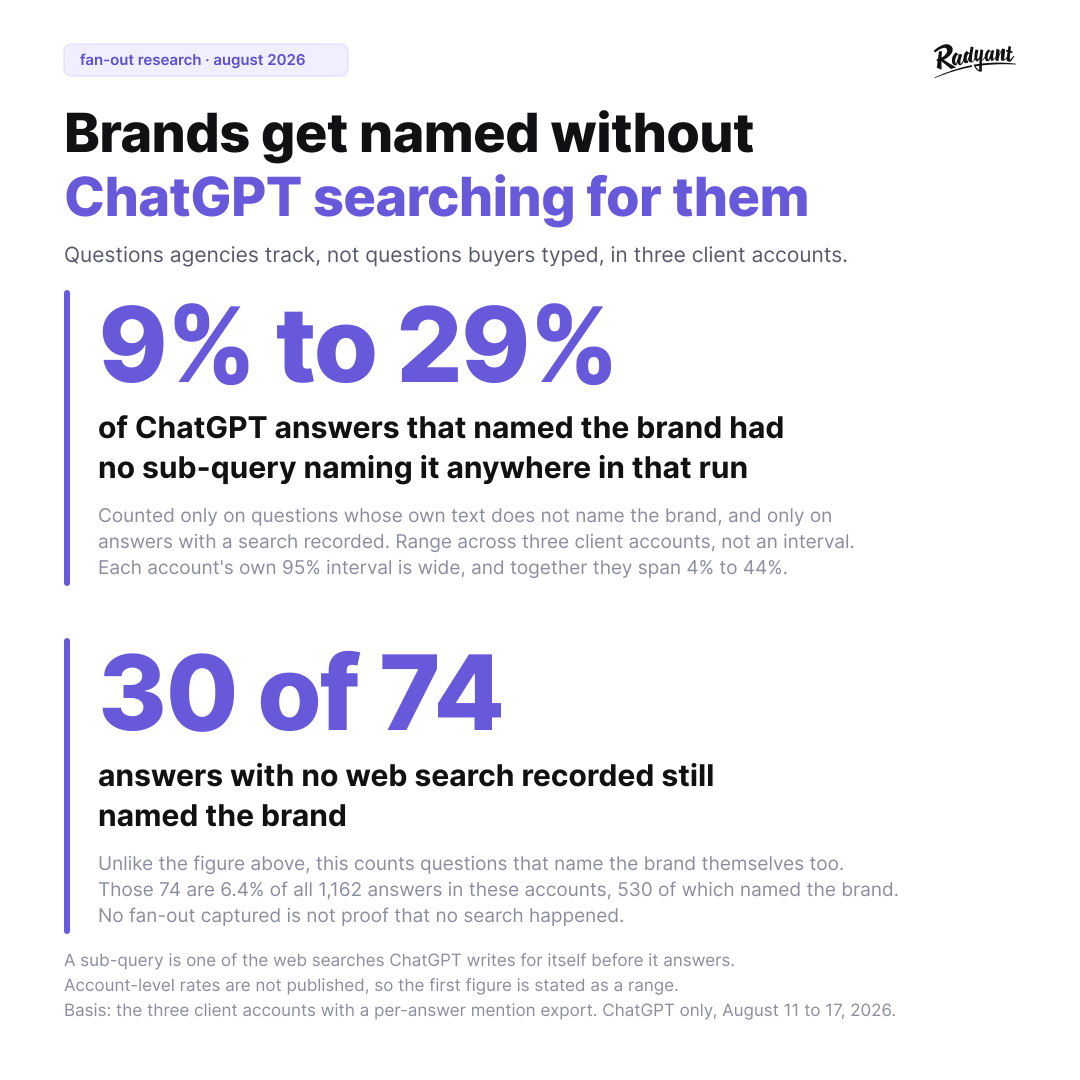
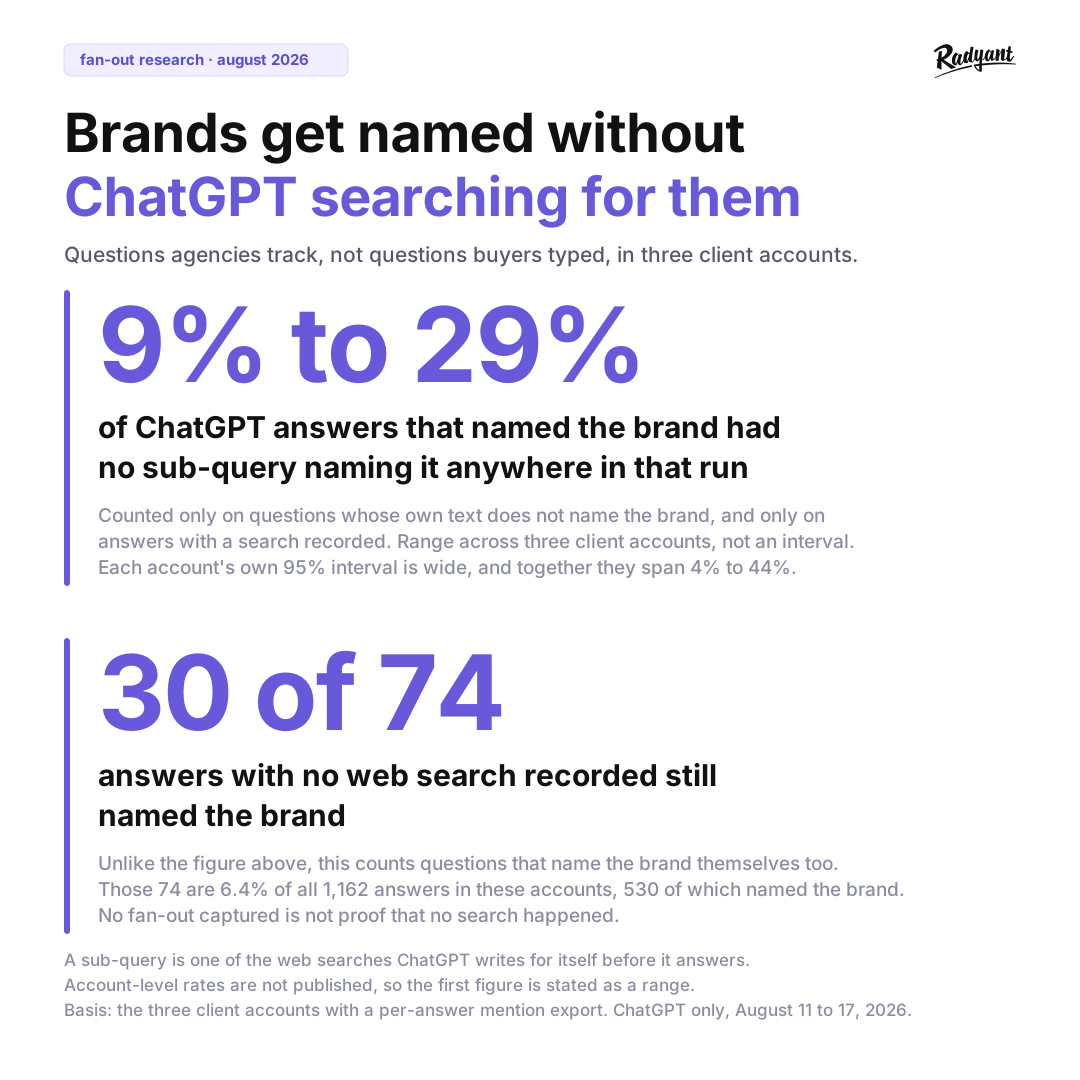
- Being in the fan-out is not a precondition for being named. Depending on the account, 9% to 29% of the ChatGPT answers that named a brand had no sub-query naming it anywhere in that run.
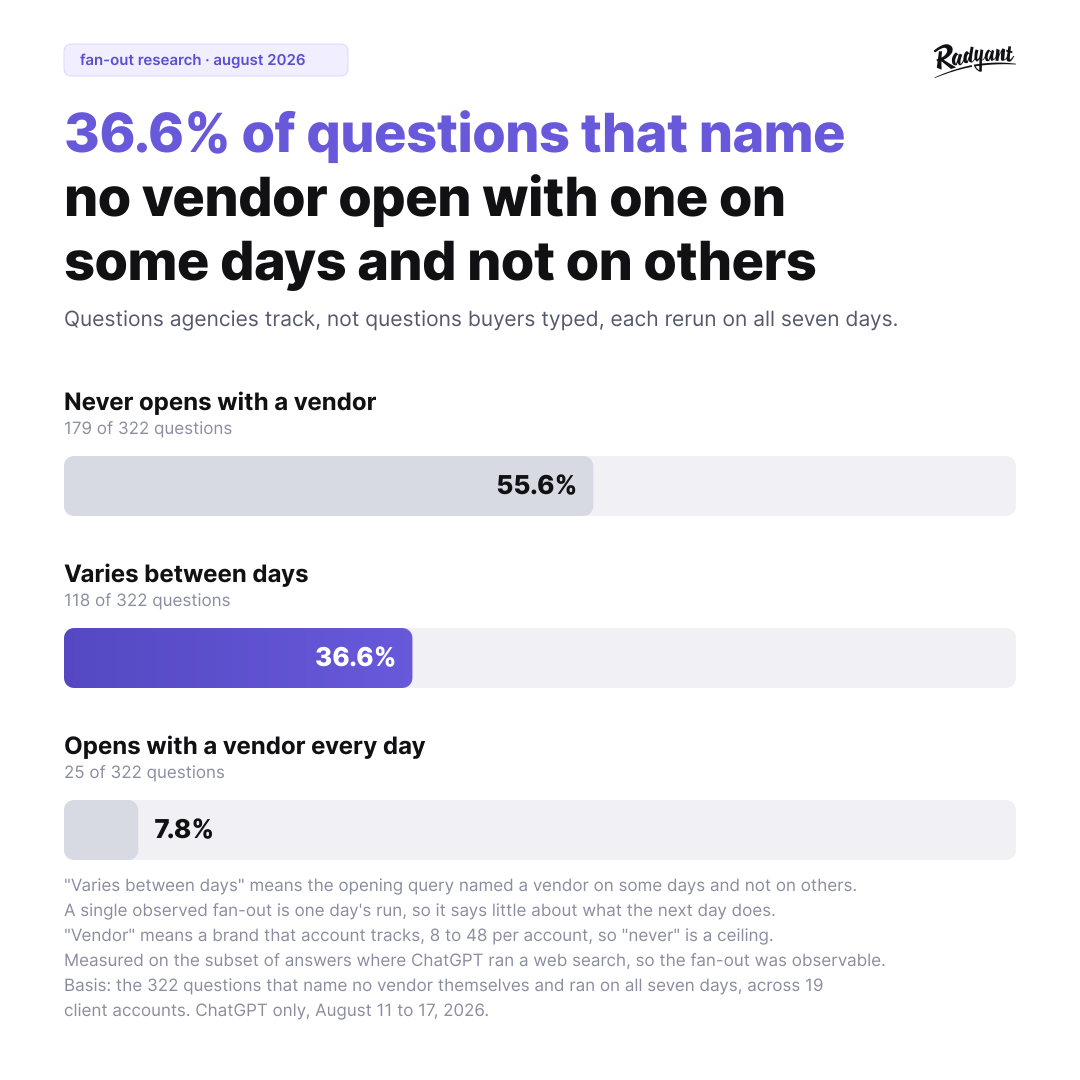
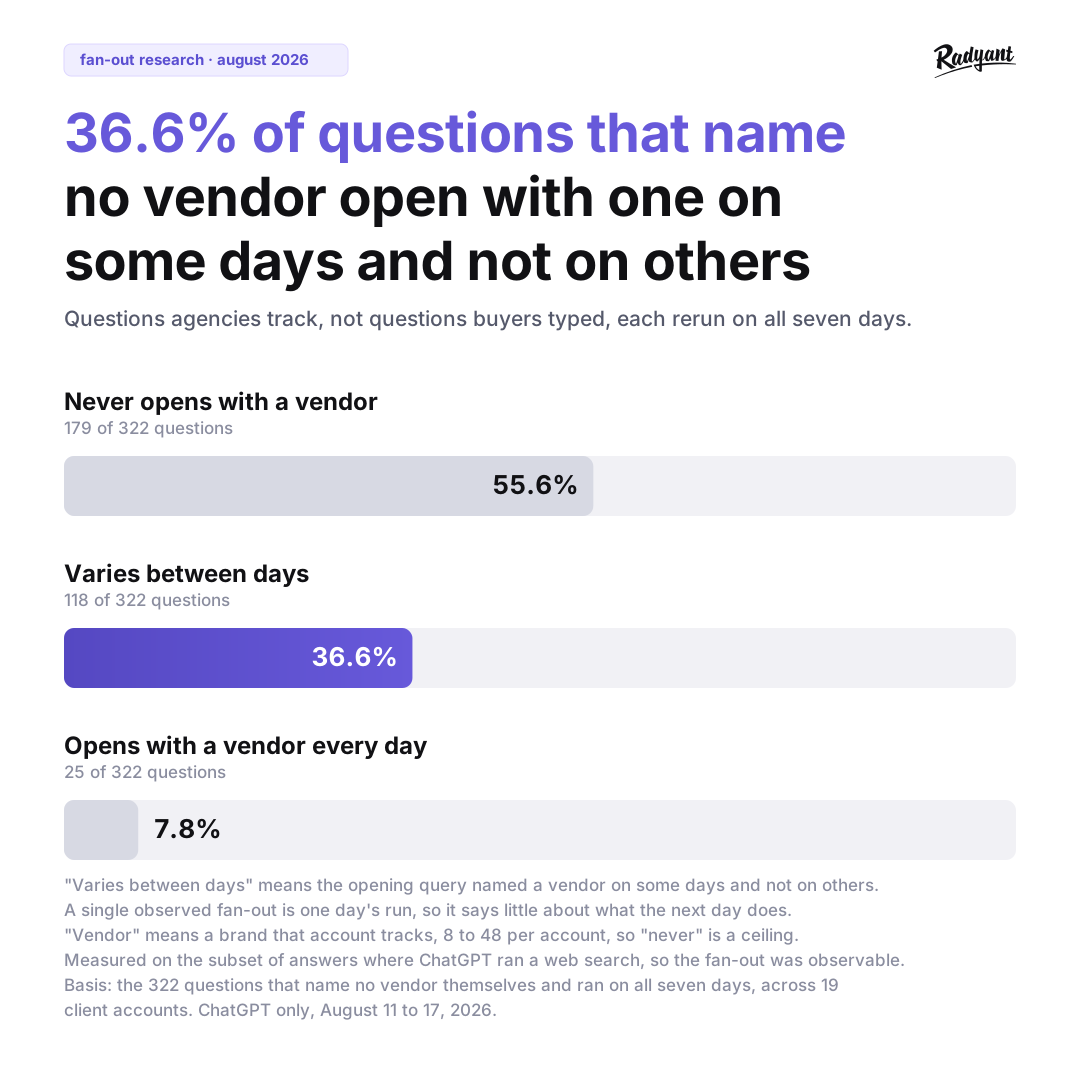
- The same question flips between days. Of 322 questions that name no vendor and ran all seven days, 36.6% named one on some days and not on others. A single screenshot is one day's run.
- Vendor-shopping questions behave differently from informational ones, a gap of 21.2 percentage points. A rate measured on the first is not a rate for everything buyers ask.
What a fan-out actually looks like
When ChatGPT answers a buying question, it does not run one search. It decomposes the question into several sub-queries and searches each. We have covered how that decomposition works and why it changes which content wins, so this piece goes straight to the contents.
A recurring shape in our data, with all vendor and product names replaced:
0  best [category] platform for small and mid-sized companies [VENDOR A] [VENDOR B] [VENDOR C] 2026
1  site:[vendor-a].com [product] small business
2  site:[vendor-b].com [product] small business
3  site:[vendor-c].com [product] small business
The opening query names vendors the user never mentioned. The queries after it check each of those vendors against its own website. Across the whole corpus, site: operators make up 0.0% of opening queries and 64.7% of queries by the fourth position. So the first query proposes and the rest verify.
How Radyant measured it
The data comes from Peec AI, which runs a tracked set of questions daily against the ChatGPT product surface and records the sub-queries the model performed. We did not instrument ChatGPT ourselves, which is a real difference from inspecting the browser session directly.
A mention, throughout this piece, means the engine naming the brand in the answer text. That is what Peec records and what every rate below counts. It is not the same as retrieval, and not the same as a citation.
| Parameter | Detail |
|---|---|
| Window | 2026-08-11 to 2026-08-17 |
| Engine | ChatGPT only |
| Accounts | 21 |
| Questions | 615 that name no vendor, 178 that do, as a control |
| Sub-queries | 24,884 |
| Verticals | Insurance, tax, construction, medical, manufacturing, education, SaaS |
| Languages | Majority German, remainder English |
Three choices there are why this says something the published work so far cannot.
We separated questions that already name a vendor from questions that do not. A question naming a vendor produces a fan-out naming that vendor, which is not evidence of anything. Published figures in this area mix the two. Our control arm ran at 90.4% against 28.6%, a gap of 61.8 percentage points, which confirms the classification does what it should.
We treated the question as the unit, not the run. Rates below are shares of runs, because that is what a fan-out is, but each question re-runs daily and those runs are not independent. The measured intra-class correlation was 0.65, meaning a run carries about a third of the information an independent observation would. So every interval is clustered by question, and every sample size is stated in questions and accounts.
The denominator is the searched subset. ChatGPT does not always search. In the accounts where we could check, 6.4% of answers had no search recorded. Nothing here describes all ChatGPT answers.
The opening query names a vendor 28.6% of the time
| Measure | Share of runs | 95% CI |
|---|---|---|
| Opening query names a tracked vendor | 28.6% | 25.6 to 31.6% |
| Same, ambiguous brand words excluded | 28.5% | 25.5 to 31.6% |
| Opening query names two or more vendors | 18.1% | 15.6 to 20.6% |
Basis: 3,842 runs of 615 questions across 21 accounts. Intervals are clustered by question, because each question re-runs daily and those runs are not independent.
Those two rows together are the shape worth carrying. In 71.4% of runs the opening query names no vendor at all. Among the runs that do name one, roughly two thirds carry more than one name. The shortlist pattern Gaetano DiNardi describes is real and it clusters: when the model reaches for names, it reaches for a set.
Our matcher only knows the brands each account tracks, 8 to 48 per account, so 28.6% is exact for tracked vendors and a floor for vendors in general. We tried to measure how much of a floor by rescoring against a much wider vocabulary, and abandoned the correction: 278 of the 318 additional matches were words like "microsoft", "chatgpt" and "gemini", inside questions that are about those platforms. So the gap to "names any vendor at all" is real and we cannot size it. We are publishing the floor rather than a number we could not defend.
Naming vendors is unstable across days
Running the same questions on seven consecutive days produced the result we find most useful.
| Behaviour of the opening query across all seven days | Share of questions |
|---|---|
| Never named a vendor | 55.6% |
| Named one on some days, not others | 36.6% |
| Named one every day | 7.8% |
Basis: the 322 questions that name no vendor themselves and ran on all seven days, across 19 accounts. Questions that name a vendor are excluded throughout, for the reason given above.
More than a third of these questions named a vendor in the opening query on some days and not on others, on text that never changed. Fewer than one in twelve named one every day. So a single observed fan-out tells you very little, and the screenshots circulating in this discussion are single observations.
The four slices below are the same corpus read four ways: what the opening query
named, how that held up across the week, how naming ran across sub-query
positions once site: lookups are set aside, and the control arm that checks the
matcher does what it should.
explore the data
One week of ChatGPT fan-out, four ways. These are questions agencies track, not questions buyers typed. Switch the slice to see how often the opening search already names a vendor, whether it does that consistently, and how the matcher behaves when the question hands it a name.
share of runs, on questions whose own text names no vendor
Names no vendor
The common case: the first sub-query goes out as a plain category question. Basis is 3,842 runs of the 615 questions that name no vendor themselves, across 21 client accounts. The matcher only sees each account's own tracked brand list, 8 to 48 names, so this bucket also holds any opening query that names a vendor nobody tracks. That makes it a ceiling, and the two naming buckets a floor.
The split runs by intent as well. Commercial questions opened with a vendor 31.0% of the time against a rate in the high single digits for informational ones, a gap of 21.2 percentage points. The informational arm rests on 68 questions across 13 accounts with an interval spanning 4.0 to 16.4%, so the gap is the finding and the informational rate itself is directional only.
Knowing which group your own questions fall into is a measurement task, which is why we track prompts continuously rather than spot-checking.
Brands get named without being searched for
We took three accounts where each individual answer could be matched to whether the brand appeared in that run's search queries, then asked how often a mention happened with the brand absent from every sub-query.
Across those three accounts, between 9% and 29% of the answers that named the brand happened that way. Separately, of 74 answers with no web search recorded, 30 still named the brand. Those 74 are a small slice of the 1,162 answers in these accounts, and no fan-out captured is not proof that no search ran.
The opening query is not a gate. Brands pass without it, routinely.
What we could not show
Appearing in the search queries does go with being named. Comparing runs of the same question on different days, runs where the brand appeared in the fan-out named it more often than runs where it did not. That held in all three accounts. Each comparison rests on fewer than 30 questions, and in one account the result turns on individual questions: of 21 that varied, 10 pointed one way, 7 the other and 4 were flat.
That is not evidence that one caused the other. Every sub-query is text the model wrote itself. Correlating "the model put the brand in its own query" with "the model put the brand in its answer" relates two outputs of the same forward pass. Our design holds the question fixed. It cannot see inside a single run.
The sub-queries are the model talking to itself. What it writes there reflects a decision it has already made, so there is nothing to publish into.
We also looked for evidence that missing from the seed set costs visibility, and did not find it. How often a brand appeared in its own fan-out tracks its ChatGPT visibility. It tracks its visibility on Gemini, Google AI Overviews, Copilot and Claude just as closely, and none of those engines can see ChatGPT's sub-queries. A measure that predicts engines it cannot possibly affect is measuring how well known the brand is.
Using each brand as its own control, comparing ChatGPT against that same brand's performance on its other engines, the association did not survive. And the accounts whose brand never appears in its own fan-outs are not losing ground over the period we can see. They sit low. Sitting low and falling are different claims, and only the first is supported.
What follows from this
No new tactic follows, and we would rather say that than invent one.
What changes is how to read your own numbers. If your brand is absent from the questions that matter in your category, that absence is worth measuring the same way a competitor's mention rate is. It says the model does not currently associate you with the category. It does not say which piece of work will change that, and "fan-out optimisation" sold as a discrete service is selling a correlation between two model outputs.
The levers that move category association have not changed: pages that are about you rather than pages naming ten brands at once, third-party corroboration, and content answering the specific questions engines decompose into. Which of those matters most depends on where your gap is, and that is a measurement question before it is a content question.
DiNardi was careful about his own limits: he states his piece is one conversation. The behaviour he describes is in our data too. What our sample adds is how often it happens, how unstable it is, and that brands get named without it.
We are also publishing this partly because it cuts against our own commercial interest. "Here is a gate and we can get you through it" is easier to sell than "there is a pattern here and it is not a gate".
What this does not establish
- One week, one engine, 21 accounts. No trend claim is supportable.
- These are not questions buyers typed. 88.9% of our non-branded questions carry a commercial tag, because they were written to track competitive visibility. That population is the one most likely to elicit a vendor list.
- The rate is bounded by each account's tracked brand list, exact for tracked vendors and a floor for all vendors.
- The corpus is the searched subset only.
- We cannot inspect how mentions are scored. That is Peec's matcher, not ours. We found one case where it missed a brand's former name and corrected it on our side.
- No causal claim is made anywhere in this piece.
The test that would settle the original question is one we have not run. It is whether a brand's domain appearing in the pages ChatGPT retrieved predicts a mention, specifically in runs where the model never named the brand in a query. That separates being found from having already been thought of, and it has an answer a brand can act on. We will publish it either way.
FAQ
What is a fan-out query?
When an AI engine gets a question, it does not search that question directly. It writes several of its own search queries and runs those instead. Those generated queries are the fan-out. The mechanism is covered in our guide on fan-out queries and citations.
Does ChatGPT always search the web before answering?
No. In the accounts where we could check, 6.4% of answers had no search recorded, and 30 of those 74 still named the tracked brand. Peec's documentation confirms ChatGPT searches only some of the time.
If my brand is not in ChatGPT's search queries, am I invisible?
No. In our data, between 9% and 29% of the ChatGPT answers that named a brand had no sub-query naming it anywhere in that run.
Can I optimise my content to get into the fan-out?
Not directly. The sub-queries are written by the model before it retrieves anything, so they reflect what it already associates with the category. They are not a surface anyone can publish to.
Why is your number lower than other published figures?
Mostly because we separated questions that already name a vendor from questions that do not. A question naming a brand produces a fan-out naming that brand. Our control arm ran at 90.4% against 28.6% for questions naming no vendor, and figures that mix both sit in between.
Does this apply to Google AI Mode and Perplexity too?
We cannot say. Our fan-out data covers ChatGPT only. Google runs its own query decomposition, and Perplexity's first sub-query in our data was usually the user's question verbatim, so we excluded it rather than report a comparison the setup forces.