 Add as preferred source on Google
Find the third-party pages LLMs use in your category, pick the right off-page lever for each, and measure whether it shows up in AI answers. A six-step playbook.
When a buyer asks an LLM which tool or provider to pick, the answer is built from pages the LLM finds on the web. Your own website is one of them, and it's the foundation everything else builds on. Alongside it, LLMs pull in "best of" lists, comparison pages, review platforms, trade articles, YouTube videos and forum threads. Those pages shape whether you make the shortlist, and how you're described when you do.
Off-page SEO is the work of getting onto those pages and making sure they describe you correctly. That covers digital PR, link building, roundup inclusion, review platforms, portals, communities and your channels on platforms like YouTube. This guide shows how to find the third-party pages that matter in your category and pick the right lever for each one. It also covers how to measure whether the work shows up in AI answers.
Key takeaways
- Mentions count more than links. In Ahrefs' study of 75,000 brands, branded web mentions correlated at 0.664 with AI Overviews visibility, backlinks at 0.218.
- Lists carry commercial questions. In the Peec AI and Wix study of 1.06 million citations, listicles made up 40.9% of citations on commercial queries.
- YouTube mentions correlate most. In an Ahrefs follow-up, YouTube mentions correlated with AI visibility at about 0.74, more strongly than any other factor measured.
- Pages LLMs already use come first. Getting added to a roundup that LLMs already retrieve for your buyers' questions works on exactly those questions. A new article has to earn its way into answers first.
- Third-party pages shape how you're described. A wrong price, an outdated feature or an unanswered negative review on a page LLMs retrieve gets repeated in answers. The fix sits on that page, alongside your own.
What counts as off-page SEO for AI Search?
Off-page SEO is everything outside your own website that shapes whether LLMs mention and cite you, and what they say about you when they do. Classic off-page SEO meant links. For AI Search it means the third-party pages that get retrieved when a buyer asks a question, whether your brand is on them, and how those pages describe it.
Each type of page needs a different kind of work:
| Lever | Where it shows up | What you (or your agency) do |
|---|---|---|
| Digital PR | News sites and trade publications | Pitch data, stories and experts that a journalist or editor decides to cover |
| Link building and roundup inclusion | "Best of" lists, comparisons and resource pages on other sites | Send editors what they need to add you, or book a clearly marked sponsorship |
| Institutions, associations, portals | Industry bodies, public portals, directories, marketplaces | Join, get listed in the right categories, keep your data current, contribute as an expert |
| Review platforms | G2, Capterra, Trustpilot, OMR Reviews and similar | Complete your profile in the right categories, ask customers for reviews, answer every review |
| Communities | Reddit, forums and other people's LinkedIn posts | Answer buyers' questions yourself, under real names |
| Your channels on other platforms | Your YouTube channel or LinkedIn page | Publish content built for the questions buyers ask |
If you'd rather hand some of this to a specialist, our comparison of off-page SEO services for AI Search covers who sells each lever as a service. Here we focus on how the work runs, and in which order.
Why do LLMs cite pages you don't own?
LLMs that search the web build their answers from the pages they retrieve. Google describes this for AI Overviews and AI Mode in its own AI features documentation: both may use a "query fan-out" technique. They issue several related searches across subtopics to put a response together. Take a buyer asking which HR software suits a 200-person company. That could set off searches for the best HR tools, HR software comparisons, two named tools side by side and HR software reviews. The pages that rank for those searches are often lists, comparisons, review pages and threads, next to vendors' own product pages.
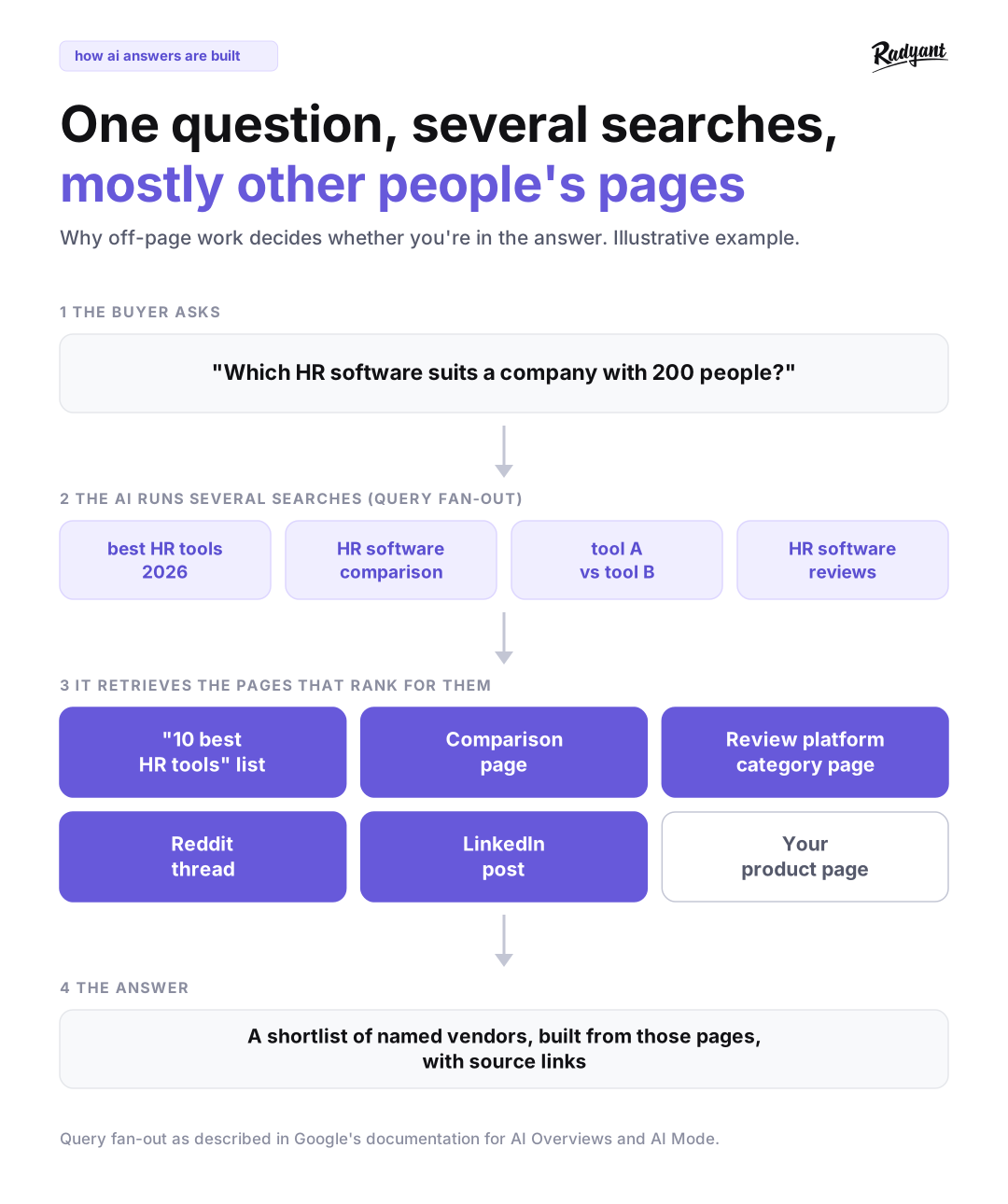
Google also says there are no extra requirements for appearing in those features beyond being indexed and eligible for a snippet. So the third-party pages that already rank for comparison searches are the ones that end up in answers. It looks like this is a large part of why off-page work matters more for AI Search than it did for classic rankings. The answer is built from several pages at once, and many of them belong to someone else.
Your own pages still matter a lot in this. They're what LLMs read when someone asks about you by name, and they're where a buyer lands after seeing you on a list. Off-page work adds the other pages to that picture. If an LLM finds you in a roundup and then reaches a thin product page, the mention does little.
The large studies point the same way:
- Earned media dominates. Muck Rack's analysis of more than 25 million links puts earned media at 84% of AI citations, and paid or advertorial content at 0.3%.
- Third-party listicles carry commercial questions. In the Peec AI and Wix study of 1.06 million citations, listicles made up 40.9% of citations on commercial queries. In professional services, 80.9% of the cited listicles came from third parties.
- Review platforms are among the strongest single sources. In our Software Prompt Study with OMR Reviews, we analysed 20,160 AI chats on software buying questions. OMR Reviews was the most-retrieved single source of 8,035 domains, ahead of YouTube and Reddit.
- Mentions correlate more than links. Ahrefs found branded web mentions correlated at 0.664 with brand visibility in AI Overviews, against 0.218 for backlinks. A follow-up found YouTube mentions correlated at about 0.74.
All of this is correlation. Big brands tend to have many mentions and high AI visibility at the same time, so none of these studies shows that a placement causes a citation. What they do show is where LLMs look. That's enough to decide where to spend, as long as you check where they look in your own category.
How do you increase your AI visibility off-page, step by step?
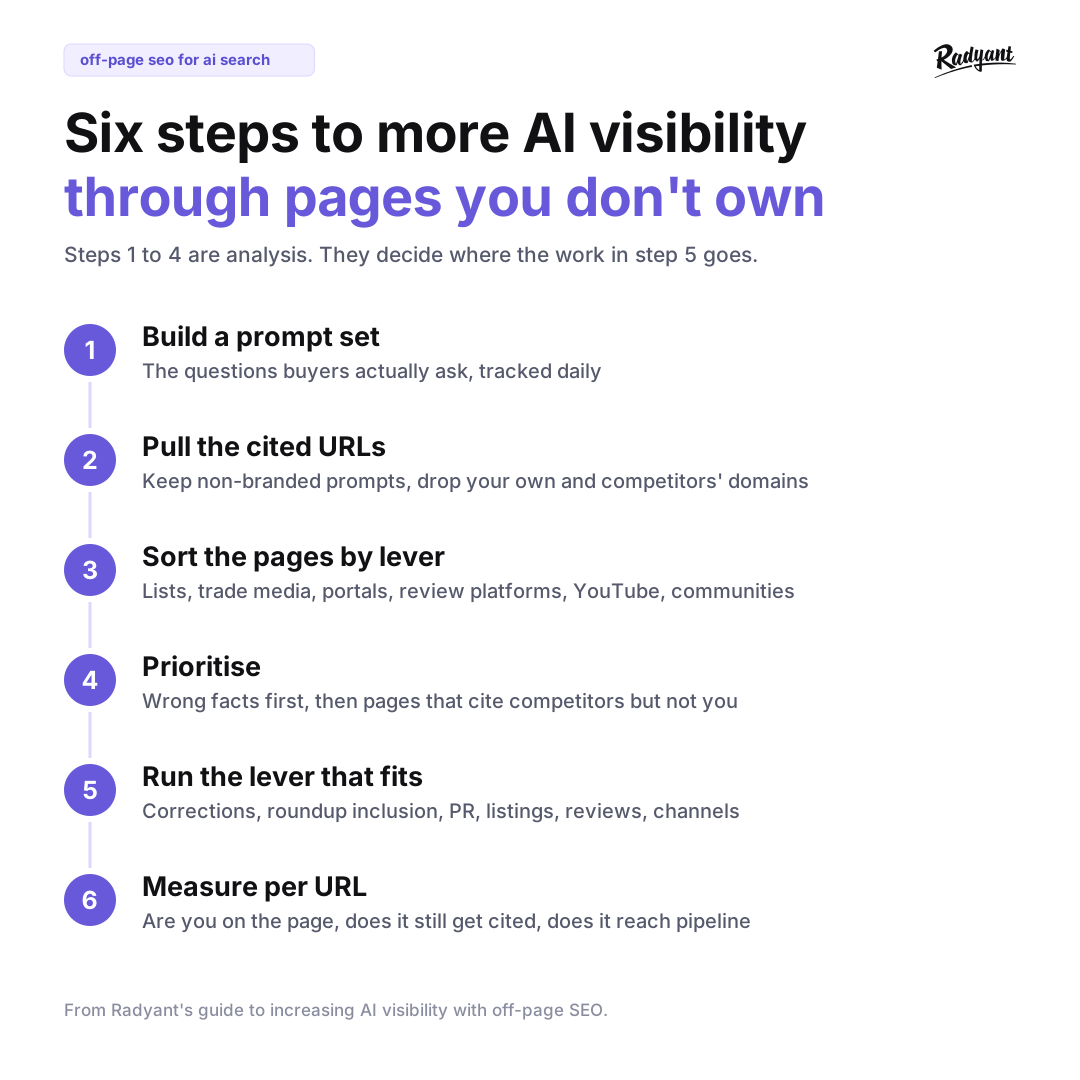
The six steps below are how you could get started with a small team. Steps 1 to 4 are analysis, and they decide everything after them. Step 5 is the ongoing work, and step 6 tells you whether it worked.
Step 1: Build a prompt set from real buyer questions
Start with the questions your buyers would actually type into an LLM before they shortlist you, in their own words. Sales calls, won and lost deals and support tickets are better sources than a keyword tool, because conversational prompts rarely show up in keyword data. Mix category questions ("best X for Y"), problem questions ("how do I fix Z") and comparison questions ("A vs B").
Run the set daily in a prompt tracking tool so you get citation data, not a one-off screenshot. Our guide to selecting and tracking prompts covers how to build the set and how many prompts you need.
Step 2: Pull the cited URLs and split branded from non-branded
Export every cited URL with its citation count over at least a few weeks. Then split the prompts into branded (they name you) and non-branded (they don't). This step changes the result more than any other.
Branded prompts like "what does X cost" or "is X any good" retrieve your own pages, your review profile and your LinkedIn page. They decide what LLMs say once someone already knows your name. Non-branded prompts decide whether you get into the shortlist at all, and they retrieve a different set of pages: roundups, comparisons and trade media. If you mix the two, your own profiles look like your most important off-page assets, when in fact they barely matter for discovery.
For the target list, keep the non-branded side and remove your own domains and your competitors' domains. What's left is the set of third-party pages that shape your category's answers.
Step 3: Sort the list by lever
Group the remaining pages by who publishes them, using the lever table at the top of this guide. A quick way through is to open the top 30 URLs and label each one:
| Page type on the list | Lever | First action |
|---|---|---|
| "Best X" list, comparison or alternatives page | Roundup inclusion | Check whether you're listed and whether the facts are right |
| News or trade article | Digital PR | Note the publication, the author and what kind of story they cover |
| Association, public portal or industry directory | Institutions and portals | Check membership, listing and data accuracy |
| Review platform category page | Review platforms | Check which categories you're listed in |
| YouTube video | Channels | Note whether it's your channel or someone else's |
| Forum or Reddit thread | Communities | Read the thread before doing anything |
Which page types lead varies a lot between categories. In B2B software, lists and comparisons are often the largest group. In health care or other regulated fields, it's more often associations and trade media, and in education or public-facing services, portals and directories. The result of this step tells you which levers matter in yours, which is the decision most teams make by habit. A team that always does digital PR will do digital PR, even when two roundups and one portal carry most of the citations.
Step 4: Prioritise the pages, starting with the ones you're missing from
Rank the pages on three things:
- How often they get cited for your non-branded prompts. This is your best proxy for value.
- Whether your competitors are on them and you aren't. Peec AI shows this as a gap analysis, and most prompt tracking tools have something similar. A page that cites three competitors and not you is the strongest single target there is.
- Whether what they say about you is right. An outdated price, a discontinued feature or a wrong category gets repeated in answers.
Start with what's wrong. A page that already gets retrieved and describes you incorrectly does damage on exactly the questions your buyers ask. Correcting it is often quicker than earning a new placement. How to do that is the first lever in step 5.
Then work down the gap list. Pages that get cited often and leave you out come before everything else on it.
Step 5: Run the lever that fits each page
Each lever needs a different kind of work. Here is how we would approach each one.
Correcting what third-party pages say about you
In one of our projects, a wrong price on a third-party page kept turning up in answers. LLMs repeat what the pages they retrieve say, so a correction on your own site alone doesn't fix it. The fix depends on who controls the page:
- Pages you can edit yourself. Directory listings, review platform profiles, marketplace entries and partner pages. Log in and update them, and keep the facts identical everywhere.
- Editorial pages. Lists, comparisons and articles. Email the editor with the correct fact and a source they can check, like your pricing page or changelog. Most publishers want to be accurate, and an update request is a small ask.
- Pages nobody will change. Old forum threads or an article that's no longer maintained. Reply in the thread where you can, and make sure enough other retrieved pages carry the current fact.
Negative claims need the same approach, with more care. When LLMs keep repeating a bad review or a critical thread, it usually helps to work on four things:
- Answer it in public. Reply to negative reviews and threads with a professional, specific answer and what you did about it. The answer becomes part of the page LLMs read.
- Add more real voices. Ask active customers for reviews at the right moment, for example after a support case was solved. Paid or incentivised reviews break most platforms' rules and undermine the point.
- Build other sources that show the current picture. It looks like LLMs lean on what several sources agree on. A single negative page carries less weight when it isn't the only one. That means review platforms, YouTube, community answers and your own pages, like a detailed FAQ or a page with customer stories.
- Track it. Monitor what LLMs say about you with a set of branded prompts, and check the sources behind negative statements every month. Our brand perception work is built around exactly this.
Roundup inclusion and link building
Your job is to make adding you easy for the editor and worth it for their reader. Pick the lists that LLMs already retrieve for your buyers' questions.
Send the editor what they need to write a fair entry. That's what the product does in one sentence, who it's for and what it costs. Add two or three things that set it apart, and a screenshot or test account. Ask for inclusion, never for a ranking position, and never for a link in exchange for money unless it's marked as sponsored. If you're already listed with outdated information, an update request is the easiest ask you'll ever send.
A few things that help:
- Pitch the specific page. Reference the exact article and why your product fits the question it answers. Generic "we'd love to be featured" emails get ignored.
- Bring something the article lacks. A missing category, a price that changed, a data point from your own product.
- Track the outcome per URL. A roundup that adds you and then gets cited is the result. A link on a page no LLM retrieves is a cost.
Some of these lists sit on other vendors' blogs rather than on media sites. A vendor that doesn't compete with you directly may still add you if your product fits the list. If you send outreach at volume, software like Respona handles the prospect lists and follow-ups. The judgement about which pages to pitch should still come from your citation data.
In our view, whether a link is followed matters less than whether the page gets retrieved. Mentions carry the weight in the studies above, and we'd take a mention without a link on a page LLMs read over a link on a page they ignore.
Digital PR
Digital PR earns coverage on publications by giving journalists something worth covering. For AI Search, it pays off when that coverage lands on the publications LLMs retrieve for your buyers' questions. A feature in a big-name outlet that never comes up for your category's questions does little for AI answers, however good it looks in a press report.
So start from the publications on your target list, and use a media database only to find the right people there:
- Find the story those publications run. Read what they published in the last few months. Trade media in regulated industries covers rule changes, numbers and expert views. Consumer media covers surprising data.
- Build the asset from data. Your own product data, a public dataset shaped into a story, or a small survey.
- Offer experts as well as releases. In health, finance and other regulated categories, the cited pages are often written with or by named experts. A founder or specialist who is available for comment gets quoted.
- Coordinate if you already have a PR agency. Agree upfront who pitches which journalists, so nobody gets the same story twice.
- Keep a press page that answers the obvious questions. Current facts, figures, logos, founder bios and a contact.
Institutions, associations and portals
In categories like health, energy, education or insurance, a lot of the cited pages aren't articles or lists at all. They're homepages, category pages and listings on portals, directories, associations and public sites.
This lever gets little attention, and a lot of it is plain admin work:
- Get listed where buyers compare. Portals and directories in your category usually have a listing process. Check that your entry exists, sits in the right categories and carries current data.
- Join the associations that get cited. Member directories and expert contributions are the usual ways onto their sites.
- Correct public information. Where a public or industry portal describes your product category, make sure what it says about providers like you is accurate.
Review platforms
Review platforms work through their multi-vendor pages. In our Software Prompt Study, about 81% of review-platform citations went to comparisons, listicles and category pages. Less than a fifth went to individual vendor profiles. So being in the right categories matters as much as the profile itself.
Reviews decide where you appear on those pages. On OMR Reviews, the category lists rank tools by their user reviews, so more genuine reviews improve your chances of a high spot on exactly the pages LLMs cite. Marvin Müller, VP at OMR Reviews, described how strictly the platform filters in episode 47 of Masters of Search. Only about 25% of the reviews people start end up live. In the same conversation, he agreed that it's worth asking customers who are only moderately happy too. A profile with some three- and four-star reviews looks more trustworthy than fifty perfect ones. And being first in a frequently cited list matters: a Peec AI analysis found roughly 13 to 17 percentage points more visibility for brands ranked first.
deeploi already had a profile on OMR Reviews. We found the categories it was missing, which put the profile into the category listings and comparison pages LLMs cite. After deeploi's own review acquisition, it earned three Leader badges and one Top Rated badge by Q3 2026. See the deeploi case.
So the order is: right categories, complete profile, then reviews.
YouTube and communities
YouTube shows up in AI answers across most categories, and in Ahrefs' study YouTube mentions correlated more strongly with AI visibility than any other factor it measured. Heyflow had a YouTube library with under 1,000 subscribers and zero AI citations. We re-optimised the existing videos against tracked prompts, and by May 2026, 32 of them were regularly cited. Our YouTube framework covers how. Most YouTube retrievals go to someone else's channel, so co-hosting with channels already cited is a second way in, which we cover in the webinars guide.
Communities need the most care. On Reddit, Heyflow's founder joined the threads where buyers compared funnel builders, under his own account. A founder's voice reads differently than a brand account, and it's the only version of community work we'd recommend. We don't do mass commenting or brand mentions in unrelated threads. For LinkedIn, see our guide based on nine B2B projects.
Step 6: Measure mentions on the target pages, not links
Re-run the same prompt set and check the same URLs every month. The questions that matter:
- Are you now on the target pages? Count it per URL.
- Do those pages still get cited? A roundup can drop out of answers after an update.
- Are you mentioned more often for the non-branded prompts? This is the outcome off-page work is for.
- Does it reach the pipeline? AI-referred sessions, branded search and self-reported attribution, read together. Our four-signal attribution model shows how to connect them.
Links and Domain Rating can stay in the report as a side metric. A report that shows only those can't tell you whether the work shows up in answers.
Give it several weeks. A page has to be updated, re-crawled and retrieved again before anything changes in the answers.
Should you pay for placements?
Sponsored content, clearly marked, is a normal part of media. The risk comes from paid links presented as editorial.
Google's spam policies have long listed "exchanging money for links, or posts that contain links" as link spam, unless the links are marked rel="sponsored" or rel="nofollow". Two more recent changes are worth knowing. We dated both from archived versions of the page:
- May 2026: generative AI is named. The version dated 15 May 2026 added "attempting to manipulate generative AI responses in Google Search" to Google's definition of spam.
- August 2026: site reputation rules rewritten. The update on 28 August 2026 rewrote the policy on third-party content published on strong host sites. It adds a human review that looks at presentation, quality, stated authorship and whether the same content appears on other sites, plus worked examples. Inside the EEA, offending sections are now treated as separate from the main domain instead of getting a manual action.
The second change matters for placements in particular. Picture a paid "best of" article on a big publisher, with no author, no links from the rest of the site and copies on several other domains. That is close to Google's own example of where it would act. Self-promotional lists are under pressure too: Lily Ray documented visibility drops of 29% to 49% on sites publishing hundreds of self-ranking "best of" lists.
No study shows that earned mentions guarantee AI visibility. What we can say is that paying for unmarked links on pages nobody reads costs money now and carries risk later. If you do pay, mark it, pre-approve every page, and judge it by whether the page gets retrieved.
When should you bring in Radyant or another provider?
Most of the steps above can run in-house, if someone owns them. Steps 1 to 4 need a prompt tracking tool and focused analysis time. Step 5 needs someone who can write to editors, build a data story and keep at it for months. That's usually where in-house teams get stuck: the analysis is done, and the outreach never gets a person.
At Radyant, off-page work runs inside our Growth Partnership, together with content, technical SEO and attribution, and it starts with exactly this target list. For Heyflow, that meant YouTube, Reddit, LinkedIn and review platforms alongside owned content, and the AI citation rate more than doubled to 3.8 over six months. See the Heyflow case. It won't be the right shape for everyone: if you only need links or a single PR campaign, a specialist is the better fit.
Our comparison of off-page SEO services for AI Search lists ten providers, from digital PR agencies to pay-per-placement services. Each comes with pricing and honest watch-outs, so you can match the provider to what your target list shows.
FAQ
What is off-page SEO for AI Search?
Off-page SEO for AI Search is the work outside your own website that decides whether LLMs mention and cite you: roundups, trade media, review platforms, portals, YouTube and communities. It overlaps with classic link building, but the goal is being on the pages LLMs retrieve, with or without a link.
Is link building still relevant for AI Search?
Yes, as a way onto the pages LLMs retrieve. Ahrefs found branded mentions correlated far more strongly with AI Overviews visibility than backlinks did, at 0.664 against 0.218. A link on a page LLMs never retrieve does little for AI answers.
How do I find out which third-party sites LLMs cite in my category?
Track a set of non-branded buyer questions daily in a prompt tracking tool, export the cited URLs and remove your own and your competitors' domains. Sort what's left by citations. The top of that list is usually short, and it's where off-page work starts.
Should I start with digital PR or link building?
Start with whatever your citation data shows. If lists and comparison pages lead, roundup inclusion comes first. If trade media and associations lead, digital PR and expert contributions do. Teams that pick the lever before reading the citations often end up working on the wrong pages.
Can off-page work change how LLMs describe my brand?
Yes, because LLMs repeat what the pages they retrieve say about you. Correcting wrong facts at the source, answering negative reviews in public and adding more current sources all change the material an answer is built from. Track what LLMs say with branded prompts so you can see whether it moves.
How long does it take for off-page work to show up in AI answers?
Usually several weeks. A page has to be updated, re-crawled and retrieved again for your prompts before answers change. Fixing a wrong fact on a page that's already cited is usually the fastest result you'll see.
Is it safe to pay for placements in 'best of' lists?
Only if the placement is marked as sponsored and the page meets Google's site reputation rules. Google treats unmarked paid links as link spam, and since May 2026 its spam policy also names attempts to manipulate generative AI responses.
Do review platforms matter for AI visibility?
In many categories, yes, mostly through their category and comparison pages. In Radyant's Software Prompt Study across 20,160 AI chats, about 81% of review-platform citations went to multi-vendor pages rather than single profiles. Being listed in the right categories matters as much as having a profile.